






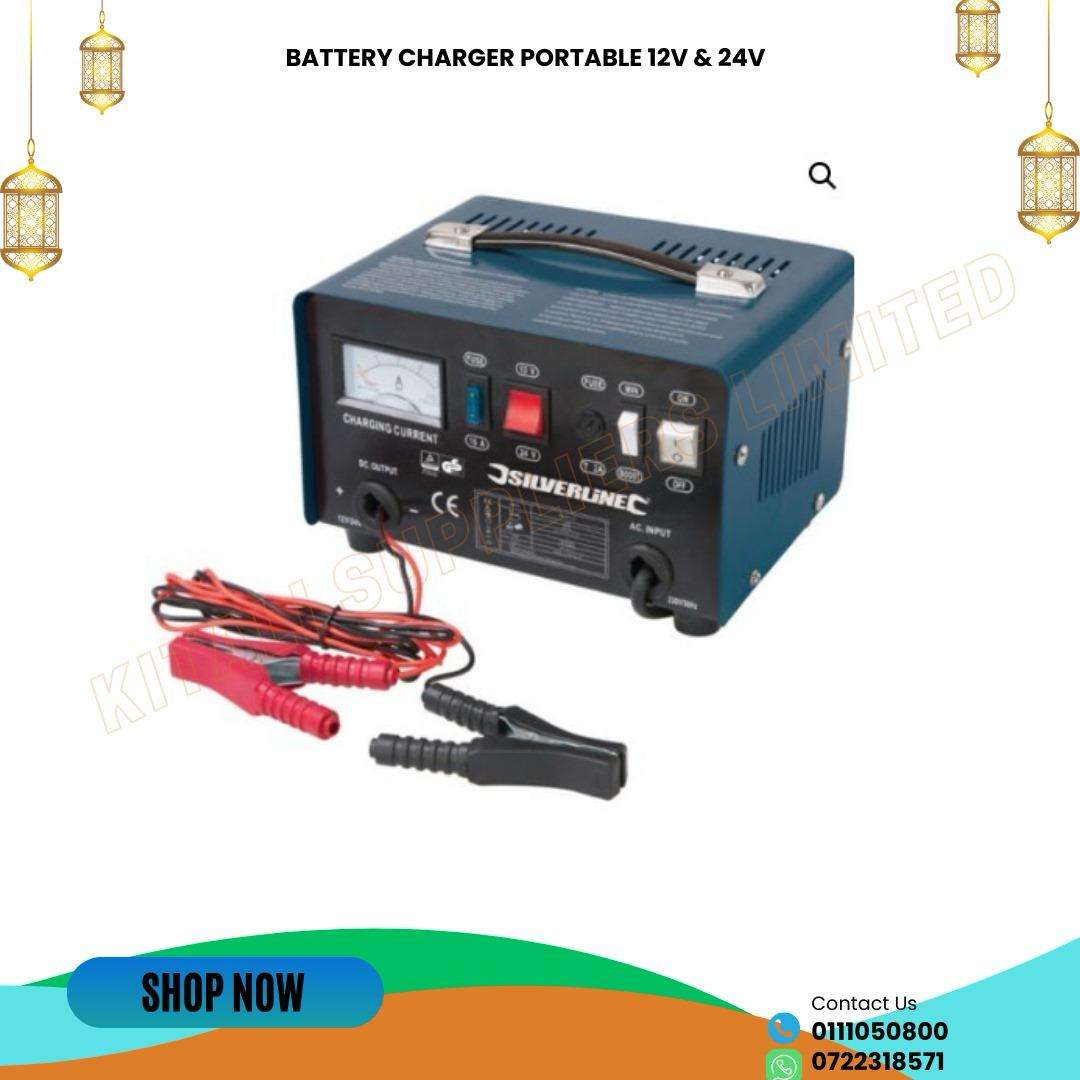
Battery chargeable portable 12v&24v
IN STOCK
4.8
1,250 Reviews | 92% Recommend
KSh22,300
KSh40,000
or $58.33/mo with affirm
In Stock
Key Features
- Active Noise Cancellation
- 40hr Battery Life
- Bluetooth 5.2
Shipping in 1-2 business days.
Delivery & Returns
Delivery Options
Choose pickup at our Nairobi store or select your county for courier delivery.
Pickup at RNG is always free. Select a county to compare courier rates.
Product Information
Description
Description
Voltage Compatibility: Ensure that the charger is compatible with both 12V and 24V systems. Some chargers are dual voltage, while others may have selectable voltage settings.Amperage Output: Consider the amperage output of the charger, as it determines how quickly it can charge your batteries. Higher amperage chargers will charge batteries faster but may require a larger power source.Portability: Look for a charger that is lightweight, compact, and designed for portability. This is especially important if you plan to use the charger in remote locations or while traveling.Input Power Source: Consider how the charger will be powered. Some chargers can be plugged into a standard AC outlet, while others may have options for DC input, such as from a car's cigarette lighter socket or a solar panel.Safety Features: Ensure that the charger has built-in safety features to protect against overcharging, short circuits, and reverse polarity. This helps prevent damage to your batteries and ensures safe operation.Durability: Choose a charger that is built to withstand the rigors of outdoor use and frequent transportation. Look for rugged construction and features such as weatherproofing and shock resistance.Charge Indicators: Look for chargers with clear and easy-to-read charge status indicators, so you can monitor the charging progress easily.Compatibility with Battery Types: Make sure the charger is compatible with the types of batteries you plan to charge, whether it's lead-acid, AGM, gel, or lithium-ion.Additional Features: Consider any additional features that may be useful to you, such as built-in jump-starting capabilities, USB charging ports for powering small devices, or the ability to function as a power bank.Warranty and Support: Choose a charger from a reputable manufacturer that offers a warranty and good customer support in case you encounter any issues or have questions about the product.
Vendor Info
Reviews (0)
0
Average Rating
(0 Review)
0%
0%
0%
0%
0%
To give a review, you need to login first.
Login