






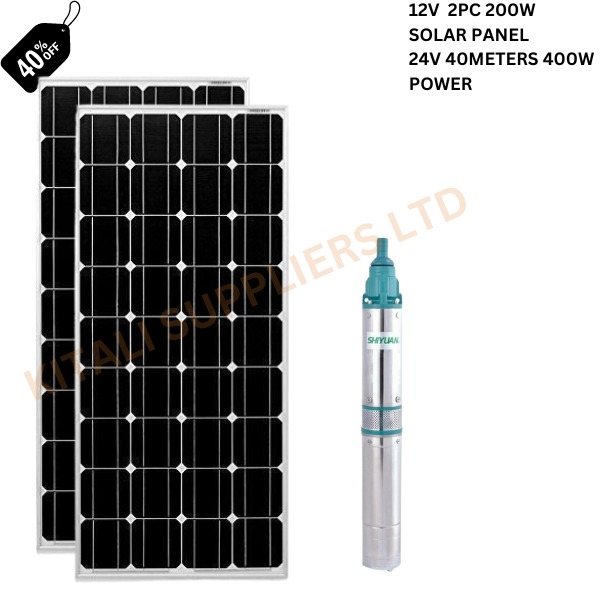
shiyuan dc pump 24v 40m 400w with panels
IN STOCK
4.8
1,250 Reviews | 92% Recommend
KSh42,500
KSh85,000
or $58.33/mo with affirm
In Stock
Key Features
- Active Noise Cancellation
- 40hr Battery Life
- Bluetooth 5.2
Shipping in 1-2 business days.
Delivery & Returns
Delivery Options
Choose pickup at our Nairobi store or select your county for courier delivery.
Pickup at RNG is always free. Select a county to compare courier rates.
Product Information
Description
Description
The Shiyuan solar DC submersible pump you're considering, boasting a 400W power rating, appears to align well with the two 200W solar panels you intend to use. However, while the total power output of your panels matches the pump's requirement on paper, real-world factors like sunlight intensity, angle of sunlight, weather conditions, and system losses need consideration. Although your panels are rated at 200W each, they might not consistently deliver their full power output due to these factors. Additionally, efficiency losses occur during the energy conversion process, from solar panel to pump operation, impacting the overall effectiveness of the system. If the pump runs continuously at its maximum power, it's prudent to account for these losses and perhaps consider additional panels or a battery storage solution to ensure consistent operation, especially during periods of reduced sunlight. Conversely, if the pump operates intermittently or at lower power levels, the two panels could prove sufficient, especially if they can charge a battery during peak sunlight hours for subsequent use when sunlight is inadequate. Striking a balance between operational requirements and solar panel capacity is crucial for achieving reliable and continuous pump functionality. Additionally, investing in monitoring and control systems can optimize energy usage, ensuring efficient operation and maximizing the lifespan of your equipment. Regular maintenance and upkeep of both the solar panels and the pump are also essential for sustaining performance over the long term. By carefully considering these factors and implementing appropriate solutions, you can harness the full potential of your solar-powered water pumping system while minimizing energy waste and maximizing reliability.
Vendor Info

Reviews (0)
0
Average Rating
(0 Review)
0%
0%
0%
0%
0%
To give a review, you need to login first.
Login