


By Solar Africa On 14-11-2026 at 5:48 pm
Generator, Inverter or Solar Backup: Kenya Guide
Power cuts are a fact of life in Kenya. Whether you run a home, a shop or a small workshop, the right backup depends on how often the power goes out, what you need to keep running, and what you can afford to buy and run. This guide helps you decide between a generator, an inverter-and-battery setup, and solar.
There is no single best option. A generator wins for long outages and heavy loads. An inverter or solar backup makes more sense for short, frequent blackouts and light loads like lights, phones, a fridge or a TV.
What you need to decide
- How often and how long are your outages? Short daily cuts suit batteries. Long or unpredictable cuts may need a generator or a larger solar system.
- What must stay on? Lights, phone chargers, WiFi and a TV are light loads. A fridge, freezer, water pump, iron, kettle or workshop tools are heavy loads.
- What is your budget? Purchase price is only part of it. Fuel, maintenance and battery replacement add up.
- Where will it run? Generators need ventilation and space; they are noisy and produce fumes. Batteries and inverters are quiet and can sit indoors.
- Who will operate and maintain it? Generators need fuel, oil checks and servicing. Solar panels need occasional cleaning.
How each option works
Generator
A petrol or diesel generator turns fuel into electricity. It can run heavy loads and keep going as long as you refill it. But it is noisy, emits fumes, and needs regular servicing. Fuel prices make running a generator costly over time, especially for daily use.
Generators are best for long outages and heavy loads: water pumps, workshop tools, freezers, and construction sites.
Inverter and battery
An inverter converts battery power (DC) into household electricity (AC). It is silent and produces no fumes, so it can run indoors. You can charge the battery from the grid when power is on, or from solar panels. Inverter systems suit short, frequent blackouts and light loads: lights, phones, routers, fans, laptops and small TVs.
Runtime depends on battery capacity and load. A 100Ah battery stores roughly 1.2kWh, so it can run a 100W load for about 10 hours in ideal conditions, less in practice. Size the battery to your essential loads and the outage length you want to cover.
Solar
Solar panels charge batteries during the day, and the battery-inverter system powers your loads at night or during outages. Solar reduces grid dependence and fuel costs. The catch is the upfront cost and the space needed for panels.
Solar makes sense if you have reliable sunshine (most of Kenya gets 4–6 peak sun hours a day on average), want to cut bills over time, and have light-to-moderate loads. For heavy loads like pumps or welders, a generator is usually more practical.
Sizing your backup
List what you want to run and for how long. Typical approximate figures: LED bulb 10W, phone charger 10W, WiFi router 15W, laptop 60W, fan 75W, 32” TV 70W, fridge 150W (but it cycles on and off).
Multiply total watts by hours to get watt-hours (Wh). Battery capacity in Ah times voltage (12V) gives Wh. A 100Ah 12V battery gives about 1200Wh, but you should only use about half to protect battery life.
For generators, match running watts to your load and check surge watts for motor-driven appliances. A 1kW generator can run lights, a TV, a fan and a small fridge, but not a pump or iron. A 3kVA generator can handle a pump or small workshop.
| Backup type | Best for | Typical loads | Running cost | Noise/fumes |
|---|---|---|---|---|
| Generator (petrol/diesel) | Long outages, heavy loads, workshops | Pumps, freezers, tools, irons | Fuel + servicing | High |
| Inverter & battery | Short frequent outages, light loads | Lights, phones, WiFi, TV, fan | Charging electricity | None |
| Solar | Cutting bills, daytime use, light loads | Lights, phones, TV, fridge (small) | Low after install | None |
Products that fit common needs
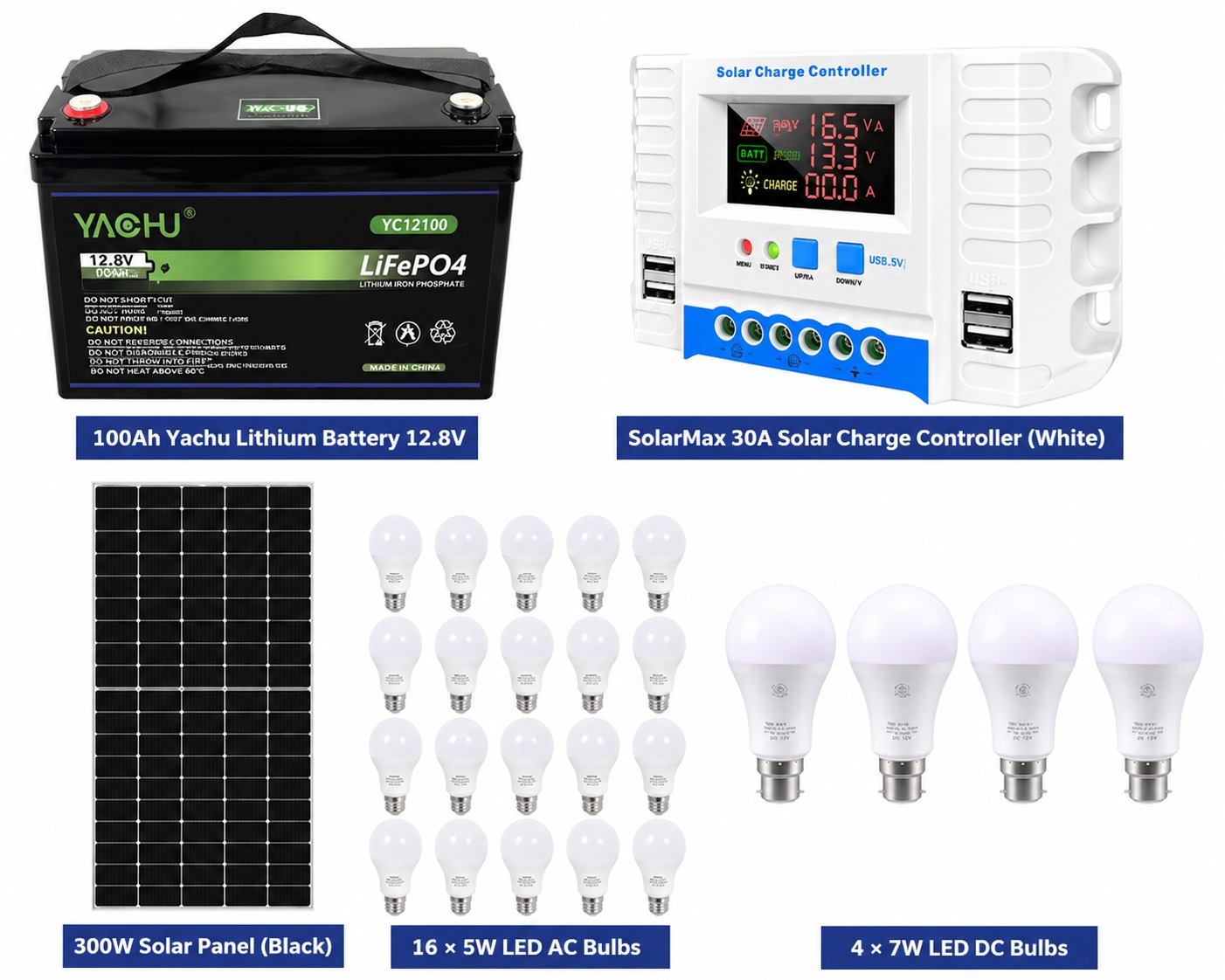
For a small shop or home office that needs silent backup for lights, phones and a router during short outages, the 100Ah Yachu Solar Power Kit with 300W Inverter, 30A Charge Controller combines a 100Ah battery, a 300W inverter, a 30A charge controller and 20 LED bulbs. It can also be charged by solar panels, giving you a path to solar later.
If you already have a battery and just need to run sensitive electronics like a laptop or TV, the Pure Sine Wave 300W Power Inverter is a pure sine wave 300W inverter that converts 12V DC to 230V AC.
For lighting-only backup in a rural home or as a first step, the Solarmax MX-315 Solar Kit is a complete solar lighting kit with a panel, power unit and three LED bulbs. It charges during the day and lights automatically at night.
For heavy loads or long outages, a generator is still the practical choice. A 3kVA petrol generator like the KMAX ITALY 3KVA Petrol Generator can run power tools or a pump. Run it outdoors or in a well-ventilated area.
Running costs
Generators cost money every time you run them. As a rough guide, a small petrol generator might use about 0.5–1 litre per hour, depending on load. Servicing every few months adds more. Inverter and solar systems cost little to run once installed. Batteries need replacing every few years, which is the main long-term cost.
Common mistakes
- Buying a generator that is too small for the load (e.g., trying to run a pump on a 1kW unit).
- Buying an inverter that is too small or a modified sine wave model for sensitive electronics.
- Ignoring battery capacity: a big inverter with a small battery will shut down quickly.
- Running a generator indoors or in a closed garage – dangerous fumes.
- Forgetting maintenance: generators need oil changes, solar panels need cleaning.
- Overspending on a large solar system when a small inverter would cover your actual needs.
Maintenance and safety
Generators: check oil and fuel before use, run in a well-ventilated area away from windows and doors, and never refuel while running. Use a qualified electrician for changeover switches to avoid backfeeding the grid.
Batteries: keep terminals clean, ensure good ventilation, and avoid deep discharges. Inverters: keep dry and dust-free. Solar panels: clean with water and a soft cloth every few weeks and check wiring for wear.
Making the choice
If you face long outages and need to run heavy loads like pumps, freezers or workshop tools, a generator is the most practical backup. If your outages are short and frequent and you mainly need lights, phones, WiFi and a TV, an inverter-and-battery system is quiet, clean and cheaper to run. If you want to cut bills over time and have moderate loads, solar is worth the investment. Many homes combine a small solar or inverter system for daily essentials with a generator for occasional heavy loads.
Whichever you choose, size it to your real needs, install it safely, and keep it maintained.
Frequently asked questions
What is the best backup power for a Kenyan home with frequent short blackouts?
An inverter-and-battery system or a small solar kit is usually best: it is silent, has no fumes, and handles lights, phones and a TV. Generators are better for long outages and heavy loads.
Can a 1kW generator run a fridge or water pump?
A 1kW generator can run a small fridge but not a typical water pump, which needs more surge power. Check the pump's starting watts and choose a generator with enough surge capacity.
How long will a 100Ah battery last during a blackout?
A 100Ah 12V battery stores about 1.2kWh, so it can run a 100W load for roughly 10 hours in ideal conditions, but you should avoid full discharge to protect battery life.
Products in this guide
- 100Ah Yachu Solar Power Kit with 300W Inverter, 30A Charge Controller
- Pure Sine Wave 300W Power Inverter
- Solarmax MX-315 Solar Kit
- KMAX ITALY 3KVA Petrol Generator
Prices and stock change often; open each product for today's price.

Author
Solar Africa