


By Solar Africa On 16-11-2026 at 7:50 am
How Many Solar Panels Does a Kenyan Home Need?
Most people who ask "how many panels do I need?" are really asking two questions: how much power do I use, and how much can the sun give me in Nairobi, Kisumu or Mombasa? Get those two numbers roughly right and the panel count follows. Skip them and you end up with a system that dies at 9pm or panels you paid for and never need.
What you need before you calculate anything
- A list of the appliances you actually run, and for how many hours a day.
- The wattage printed on each appliance's label or plug (or a typical figure from the table below).
- A rough idea of how many panels will fit on your roof, facing the sun.
- Space and budget for a battery bank, since panels alone power nothing at night.
- An inverter with a continuous rating above your biggest load.
Step 1: Count your daily watt-hours
For each appliance, multiply its watts by the hours it runs per day. A 10W LED bulb on for five hours is 50 watt-hours (Wh). Add everything up and you have your daily energy need in Wh, or divide by 1,000 for kilowatt-hours (kWh).
Typical approximate figures: LED bulb 7–12W, phone charger 5–10W, television 60–100W, fan 40–70W, fridge 100–200W running (but it cycles on and off, so budget roughly a third to half of that per hour on average), laptop 50–70W, 0.5HP water pump 370–500W.
| Load | Daily energy (approx.) |
|---|---|
| 4 LED bulbs, 5 hrs each | 200 Wh |
| 2 phones + 1 laptop charged daily | 200 Wh |
| 32" TV, 5 hrs | 400 Wh |
| Small fridge (cycling) | 800–1,200 Wh |
Step 2: Allow for Kenya's real sunshine
Most of Kenya gets roughly 4.5 to 6 peak sun hours a day, with the coast and northern areas at the higher end and highland areas in the rainy seasons at the lower end. Size on 4 to 4.5 hours to be safe, not on a perfect January day.
Panels also lose a little to heat, dust and wiring. A common rule of thumb is to add 25–30% margin so the array still charges the battery on a cloudy July afternoon.
Step 3: Convert to panel watts
Divide daily Wh by peak sun hours, then add the margin. Example: 1,000 Wh ÷ 4 hours = 250W, plus 30% = about 325W of panels.
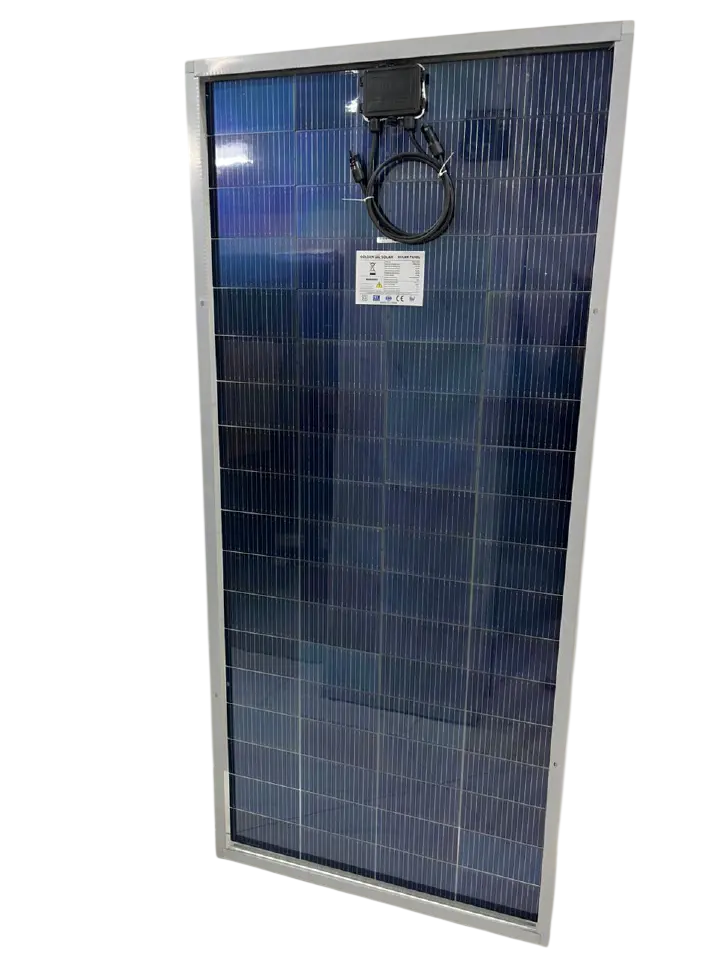
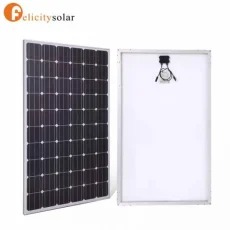
Now match the array to real modules. If you are building a small setup, the 60w Solar Panel 18v Monocrystalline Solar Panel is useful for topping up a 12V battery or for a shed or gate light, and several can be combined. For a proper household array, a 270W module like the 270W Golden Solar Bifacial Solar Panel means two panels give you well over 500W of array, which suits a medium home nicely. Roof size matters too: a 270W panel is roughly 1.6–1.7 m², so a 2kW array needs about 12–13 m² of clear, unshaded roof.
Step 4: Match panels to battery and inverter
Panels charge the battery; the battery carries you through the night; the inverter converts battery power to 230V for your appliances. All three must be sized together.
Battery: a lead-acid battery should not be drained below about half its capacity. A 100Ah 12V battery therefore gives roughly 600Wh of usable energy. The 100ah solarmax battery fits small and medium systems, while the Solarmax 12.8V 100Ah Lithium LiFePO4 Solar Battery lithium option can be discharged deeper and takes a faster charge, which means fewer panels are needed to refill it.
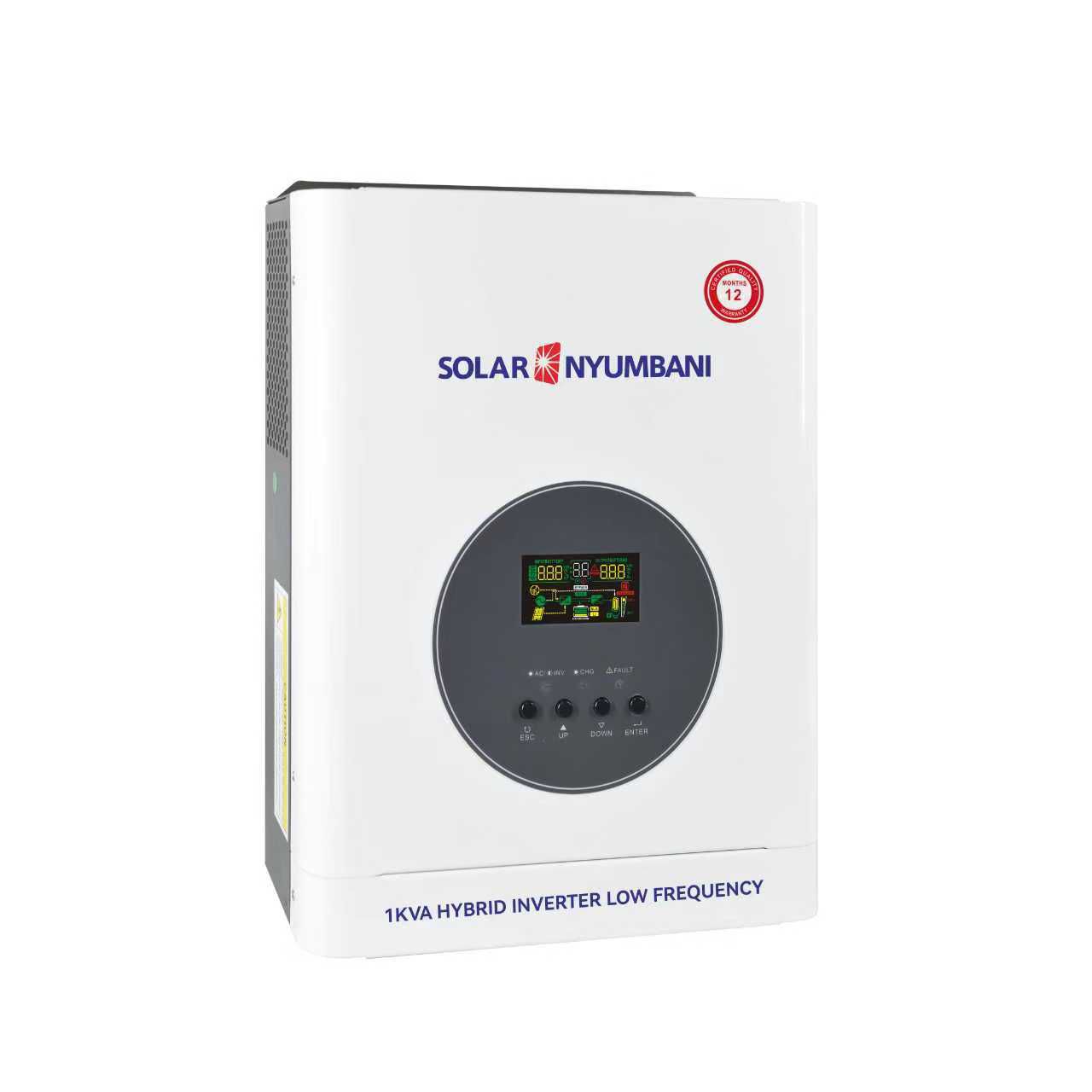
Inverter: add up the watts of everything that might run at once, then add headroom. A fridge plus lights plus TV might total 400W, so a 1kVA inverter such as the Nyumbani 1KVA Solar Hybrid Inverter covers a small home comfortably. Do not expect a 300W inverter to start a water pump: pump starting surges are several times the running wattage.
Array vs battery: a useful check is that the panels can replace a day's use in one good day. If your battery is 1.2kWh usable and you use 1kWh daily, you want roughly 300W of panels, not 100W.
Worked example: small home
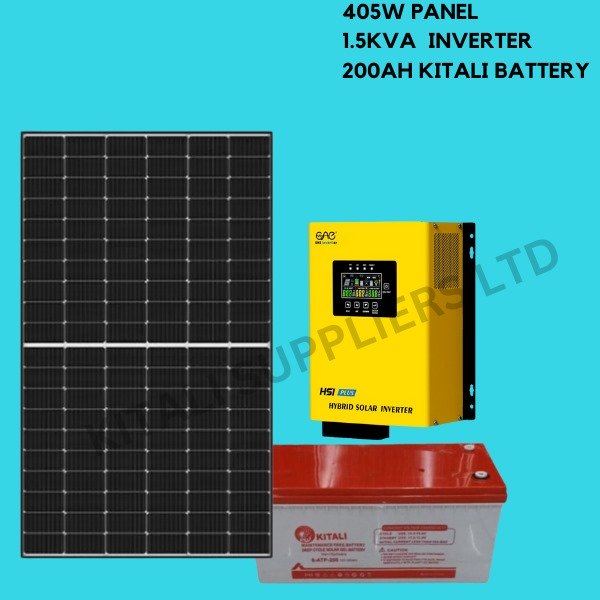
Four LED bulbs, two phones and a radio: about 400Wh a day. At 4 sun hours with a 30% margin that is about 130W. One 150W panel is plenty; pair it with a 100Ah battery and a small inverter. A ready-made package like Complete Solar Power Kit keeps the numbers matched for you, since the panel, battery, inverter and controller are chosen to work together.
Worked example: medium home
Lights, TV, fridge, fans and charging: roughly 2kWh a day. Divide by 4 hours = 500W, add 30% = about 650W. Two 270W panels (540W) is slightly tight; three gives comfortable headroom. Use a 24V battery bank of at least 200Ah and a 1–3kVA inverter, and let the panels and battery be sized as a pair.
Worked example: home with a borehole pump
A 0.5HP pump running two hours uses about 800Wh; a 1HP pump about 1.5kWh. But the array must also cover the pump's starting surge, which can be three times its running wattage. Plan on 1.5–2kW of panels, a large battery bank, and a pump controller or inverter rated for the surge. Keep the pump on a timer; pumping into a tank during sunshine is far cheaper than pumping at night from batteries.
Roof space, orientation and expansion
- Face panels within about 30° of true north, tilted 10–15° for most of Kenya (steeper in the highlands helps in June–August).
- Avoid shade from trees, water tanks and the next building; even a small shadow on one panel drags down the whole string.
- Leave room on the roof and on the charge controller for one or two extra panels later.
- Ask for an MPPT controller if your panels are more than a few metres from the battery.
Common mistakes
- Sizing from appliance count instead of watt-hours.
- Using the highest sunshine figure instead of a conservative one.
- Buying a big battery with too few panels to charge it.
- Undersizing the inverter and tripping it every time the fridge starts.
- Forgetting that panels make nothing at night, however many you buy.
Maintenance and safety
Wipe panels every few weeks in dusty areas; dirty glass can cut output noticeably. Check battery terminals for corrosion and keep the battery in a ventilated place, never in a closed bedroom. Use fuses between the battery and inverter, and DC-rated cables. Have the wiring checked by a qualified technician before you add loads. A solar system is safe when installed properly and dangerous when cables are undersized or unfused.
Frequently asked questions
How many solar panels do I need to run a fridge and TV in Kenya?
A fridge, TV, lights and charging usually add up to about 2kWh a day. At roughly 4 sun hours with a 30% margin, that points to about 650W of panels, so two to three 270W modules depending on your battery bank.
Can I start with a small system and add more panels later?
Yes, but plan for it. Leave spare roof space, choose a charge controller with headroom, and make sure your battery bank and inverter can handle the extra array before you buy more panels.
How many hours of sunshine can I count on in Kenya?
Most areas get about 4.5 to 6 peak sun hours a day, with less in the long rains. Size your system on about 4 hours and add a margin so it still works on cloudy days.
Products in this guide
- 60w Solar Panel 18v Monocrystalline Solar Panel
- 270W Golden Solar Bifacial Solar Panel
- 100ah solarmax battery
- Solarmax 12.8V 100Ah Lithium LiFePO4 Solar Battery
Prices and stock change often; open each product for today's price.

Author
Solar Africa
Related posts