


By Solar Africa On 17-11-2026 at 7:25 am
Hybrid vs off-grid inverter: which fits your Kenyan home?
If you are buying your first battery-backed power system, the inverter type matters more than the brand. A hybrid inverter and an off-grid inverter do similar work, but they treat grid power and generator input very differently. Pick the wrong type and you either overspend on features you cannot use, or find yourself unable to charge from KPLC or a generator.
This guide explains the difference in plain language and helps you match the right type to your site, whether you have a KPLC connection, a rural home with no grid, or a shop that runs a generator.
What you need before you shop
- A list of the appliances you want to run, with their wattages (check the labels, or use typical figures: LED bulb about 10W, phone charger 10–20W, 32-inch TV about 60W, fan about 60W, fridge roughly 150–250W when running).
- The number of hours each appliance runs per day.
- Your power source: KPLC only, KPLC plus a generator, or no grid at all.
- Whether you plan to add solar panels now, later, or never.
- A battery budget, since the battery often costs more than the inverter.
- Someone qualified to do the wiring, earthing and changeover.
How an off-grid inverter works
An off-grid inverter is built to run on battery and solar alone. In a simple setup, solar panels charge the battery through a charge controller, and the inverter turns the battery's DC power into 220–240V AC for your appliances. There is no grid input to manage, and usually no grid charging in the basic models.
This suits a rural home, a farm store or a site with no KPLC line. The system is straightforward and cheaper for the same output, but you are the power station: if the battery runs flat on a cloudy day, you wait for sun.
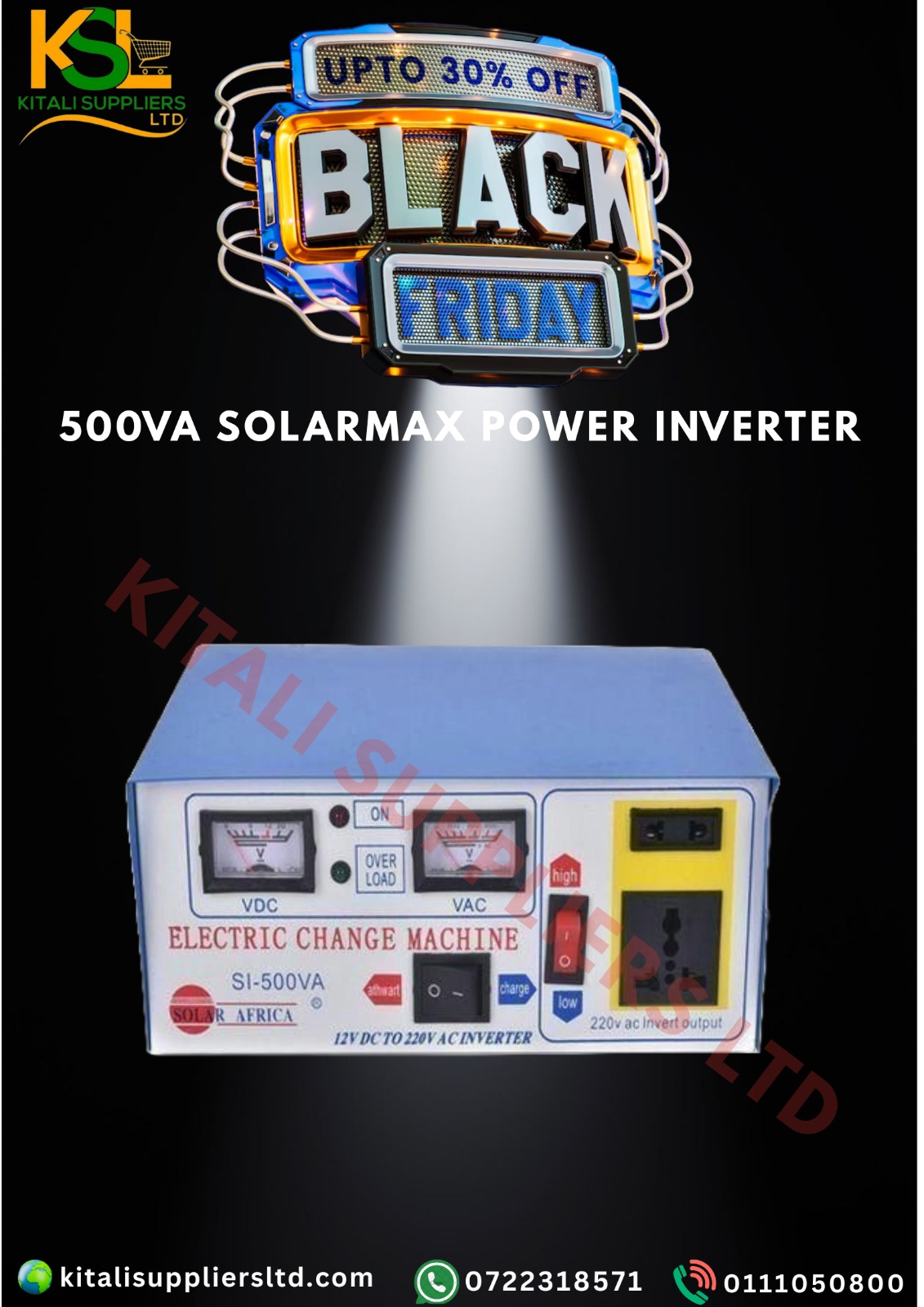
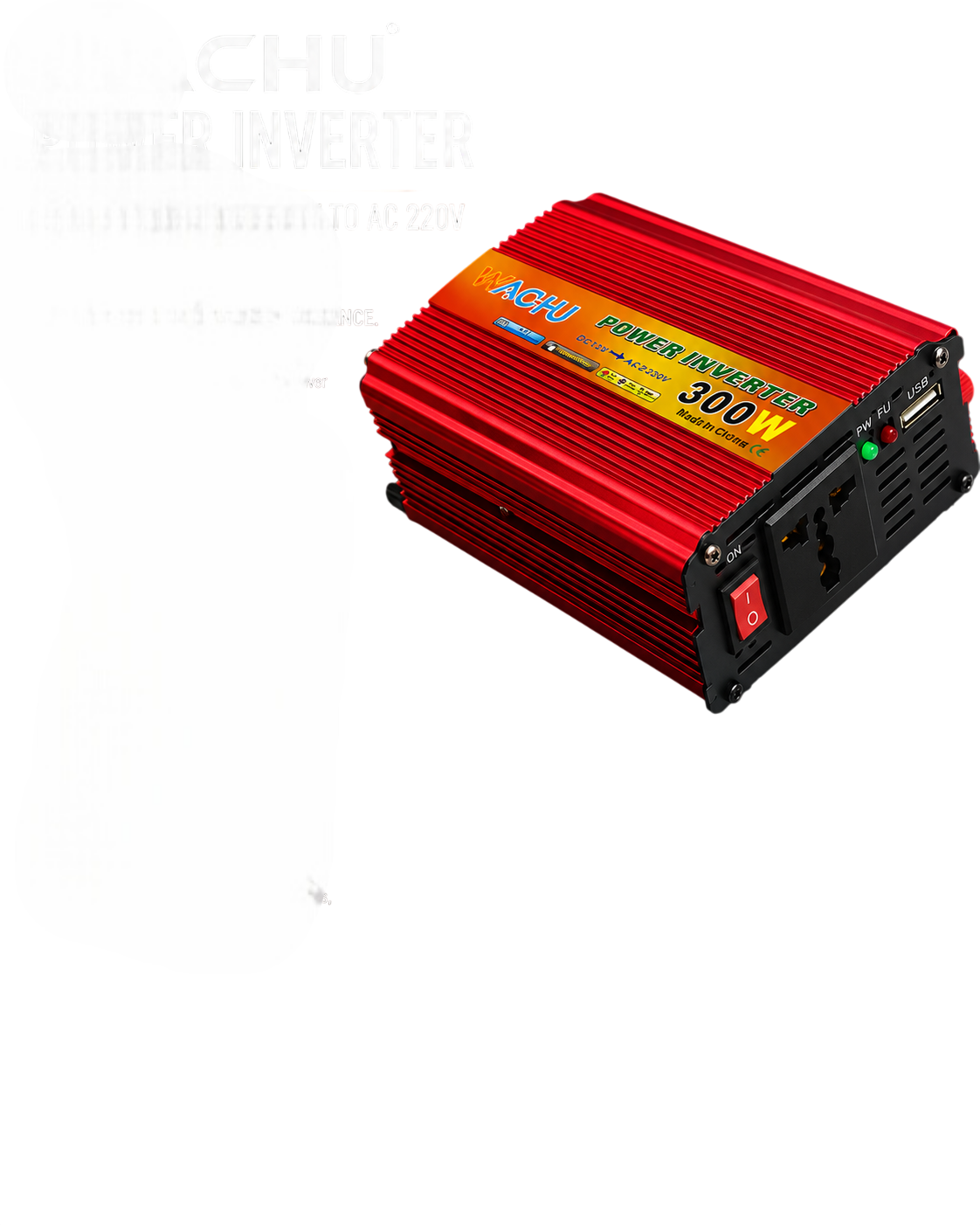
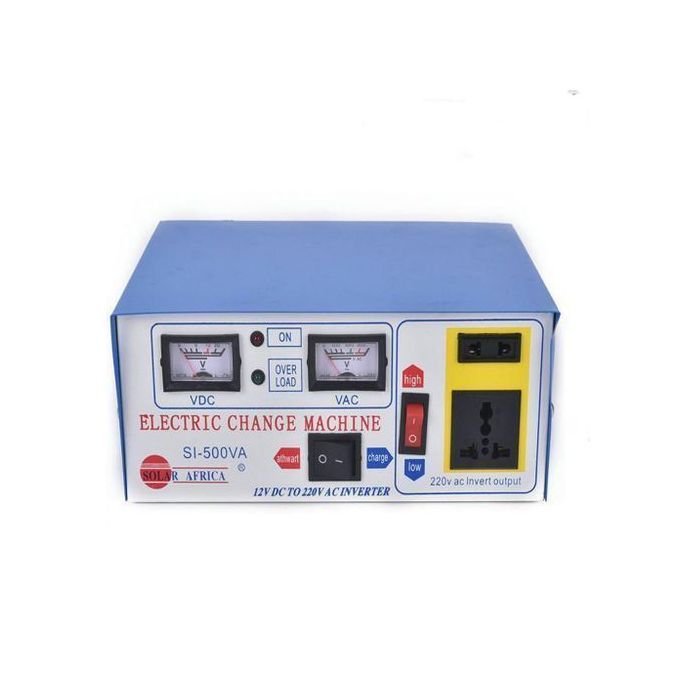
Several small inverters sold here are this kind of battery-to-AC unit rather than full solar inverters. The 500VA Solar Power Inverter is described as part of a solar setup for essential appliances and lighting, and the YACHU 600W solar power inverter converts 12V battery power to 230V AC for standard devices. Neither manages a grid connection, so they belong on sites where the battery is the only supply.
How a hybrid inverter works
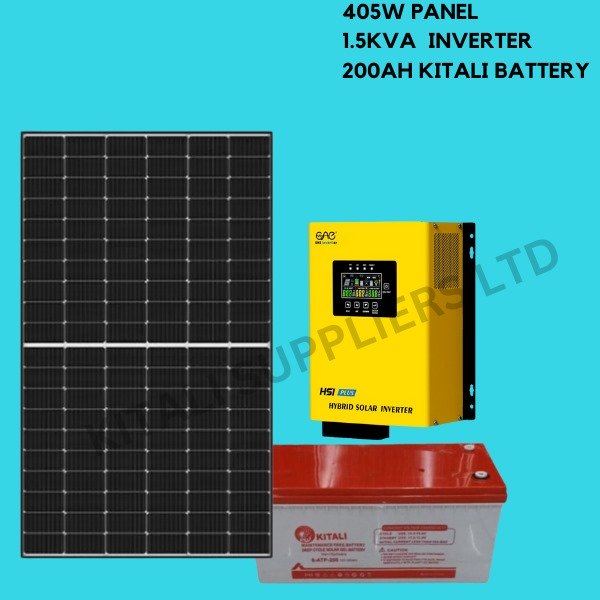
A hybrid inverter accepts several inputs at once: solar panels, the grid, a generator, and a battery. It decides where power comes from. When KPLC is on, it can run your loads and charge the battery; when the grid fails, it switches to battery and solar. Many hybrids also let you set priorities, such as solar first, battery second, grid last.
That flexibility is what you pay for. If you have a KPLC line now, or expect to add one, or want to plug in a generator during long outages, a hybrid is usually the safer choice. It also lets you start small with a battery and add panels later without replacing the inverter.
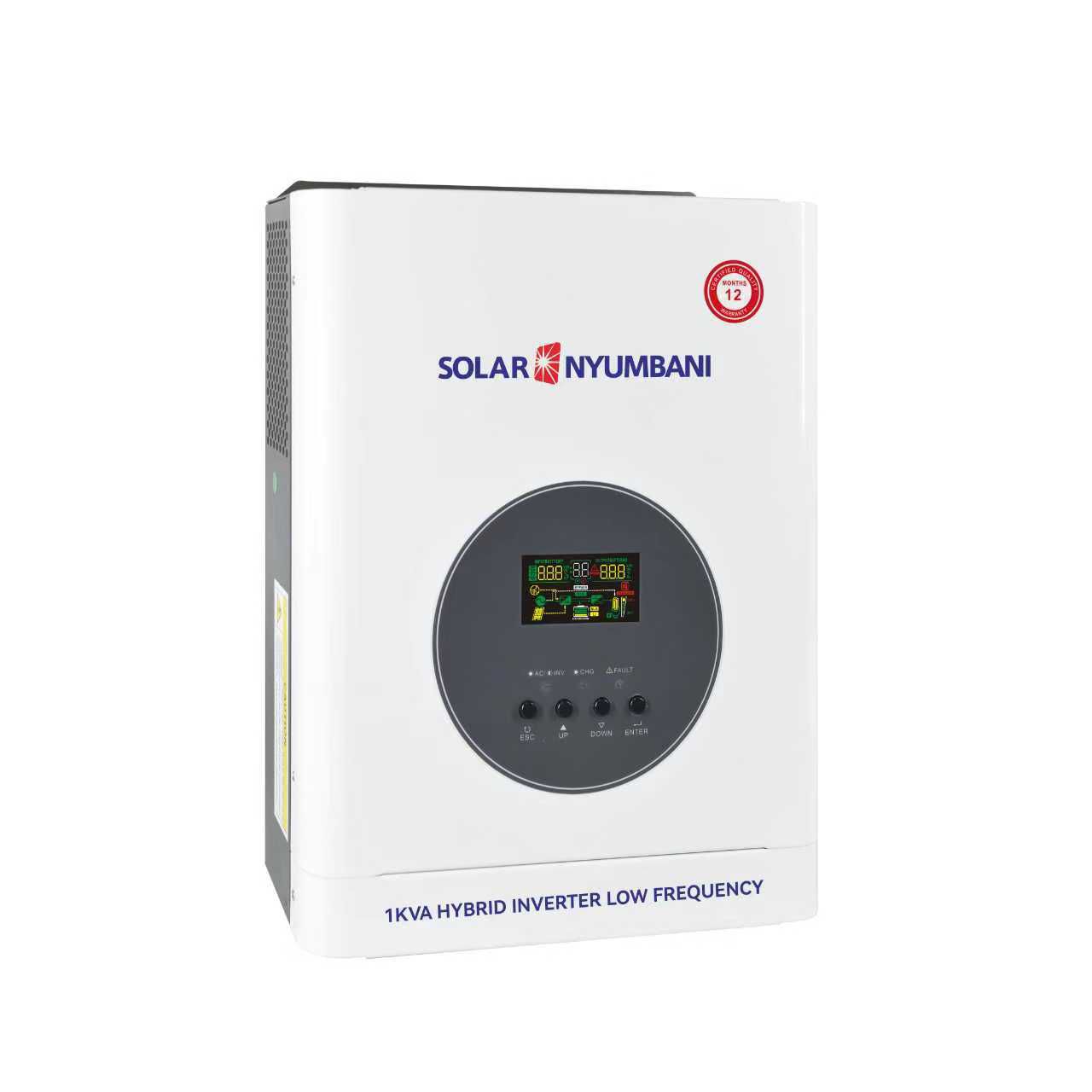
The Nyumbani 1KVA Solar Hybrid Inverter is described as a 1KVA hybrid unit that combines solar, grid and battery input and switches between sources automatically, for small homes and shops running lighting, TV, fans and charging. If you only need a compact battery-to-AC unit for lights, a router and a small TV, the Solarmax 500VA 12V Modified Sine Wave Power Inverter is a 500VA (about 300W) 12V inverter with overload and overheat protection; it is a modest backup unit, not a grid-management inverter.
Side-by-side comparison
| Feature | Off-grid inverter | Hybrid inverter |
|---|---|---|
| Grid (KPLC) input | Usually none | Yes, managed automatically |
| Generator input | Rarely | Commonly supported |
| Solar charging | Yes, often through a separate controller | Built-in solar charge control on most models |
| Battery charging from grid | No | Yes |
| Best for | Rural homes, farms, no-grid sites | Grid-connected homes, shops with generators, planned solar |
| Cost | Lower for the same output | Higher, but expandable |
Sizing the system without overspending
Start with load, not with the inverter label. Add up the watts of everything you want running at the same time, then add a margin. Inverter ratings are in VA, roughly watts divided by a power factor of about 0.8, so a 1KVA unit handles roughly 800W of ordinary loads. Motors such as fridges and pumps draw a surge on startup, often two to three times their running wattage, so leave headroom.
Then size the battery in amp-hours for the hours you need. A 12V 100Ah battery stores about 1,200 watt-hours, but you should not drain it flat; plan to use roughly half. That is about 600 watt-hours, enough for a few lights, a TV and phone charging for an evening.
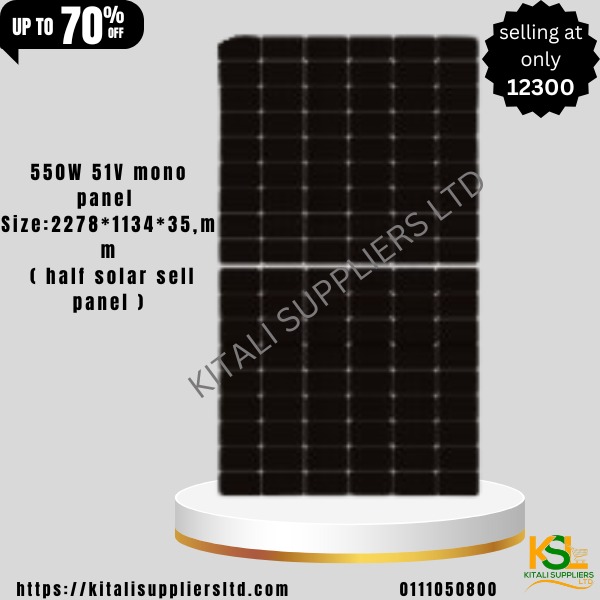
For solar, Kenyan sun gives roughly 4–5 peak sun hours a day on a good roof. A 270W panel can therefore produce around 1,000–1,300 watt-hours daily in fair weather. The Golden Solar 270W Bifacial Dual-Glass Monocrystalline Solar Panel is a 270W bifacial monocrystalline panel suited to home and off-grid systems; match panel voltage and current to what your inverter's charge controller accepts.
Choose a deep-cycle battery rather than a car battery. A 100Ah or 150Ah deep-cycle unit is the usual starting point for a small home, and the inverter's DC input voltage (12V, 24V or 48V) must match the battery bank.
What it costs to run
An off-grid system's running cost is mostly battery replacement every few years, plus panel cleaning. A hybrid system can also save on KPLC bills by running daytime loads on solar, but the savings depend on how much sun you get and how you set priorities. Generators are the expensive part: fuel and servicing add up quickly, so use one to charge the battery rather than to run heavy loads directly.
Common mistakes
- Buying an off-grid inverter for a home with KPLC, then discovering it cannot charge from the grid.
- Buying a tiny inverter and expecting it to start a fridge or pump.
- Mixing battery voltages, or adding a new battery to an old bank.
- Running long, thin DC cables, which waste power and heat up.
- Forgetting surge loads and then blaming the inverter when it trips.
- Ignoring earthing and proper fusing.
Maintenance and safety
Keep batteries in a ventilated space, upright and dry, and check terminals for corrosion every few months. Clean panels in the early morning or evening. Do not open the inverter casing, and never work on DC wiring with the battery connected. Use a qualified installer for earthing, changeover switching and any grid connection, and label every circuit clearly.
Finally, match the type to the site before you compare prices. If you have KPLC or expect a generator, a hybrid is usually the right first buy; if there is no grid and no plan for one, a well-sized off-grid system will serve you well for less.
Frequently asked questions
Can an off-grid inverter charge from KPLC power?
Basic off-grid inverters usually have no grid input, so they cannot charge from KPLC. If you have a grid connection, choose a hybrid inverter that manages grid charging.
Is a hybrid inverter worth it if I have no solar yet?
Yes, if you have KPLC or a generator, because it can charge the battery from that source now and accept solar panels later without replacing the inverter.
What size inverter do I need for lights, a TV and phone charging?
Add the wattages (a few lights, a small TV and chargers typically total under 200W) and allow headroom; a 300–500W unit suits such a load, while a fridge or pump needs a larger inverter that can handle startup surge.
Products in this guide
- 500VA Solar Power Inverter
- YACHU 600W solar power inverter
- Nyumbani 1KVA Solar Hybrid Inverter
- Solarmax 500VA 12V Modified Sine Wave Power Inverter
Prices and stock change often; open each product for today's price.

Author
Solar Africa
Related posts