


By Solar Africa On 16-11-2026 at 7:43 am
Inverter Sizing Guide for Kenyan Homes: What Size Do You Need?
Choosing the right inverter size can feel like guesswork, but it doesn't have to be. Whether you're tired of blackouts or setting up a small solar system, this guide walks you through the numbers step by step. You'll learn how to add up your appliances, allow for start-up surges, and pick an inverter that won't strain or waste power.
What you need
- A list of appliances you want to run, with their wattages (check the label or manual).
- A calculator or phone.
- Patience to do a little arithmetic — it pays off.
- Optional: a plug-in energy monitor to measure actual usage.
Step 1: List your appliances and their wattages
Start by writing down every device you plan to power. For each, note the wattage. If only amps are given, multiply by 230 (volts) to get watts. Here are typical approximate figures to help you estimate:
| Appliance | Typical wattage (approx.) |
|---|---|
| LED bulb | 5–10W |
| Phone charger | 5–15W |
| Laptop | 50–90W |
| TV (32–43") | 60–120W |
| Ceiling fan | 60–80W |
| Fridge (small) | 100–200W |
| Water pump (0.5HP) | 370W |
| Iron | 1000–2000W |
Remember these are rough guides; always check the actual label. Add up the wattages of everything you want to run at the same time. That total is your continuous load.
Step 2: Account for surge power
Motors and compressors (fridges, pumps, fans) draw a big burst of current when starting — often 2–3 times their running wattage. Your inverter must handle this surge for a few seconds. So look at the highest-surge appliance and add its surge to the rest of the load. For example, if a fridge runs at 150W but surges to 450W, and you also have 200W of other devices, your peak demand is 450 + 200 = 650W. Choose an inverter with a continuous rating above your total running load and a surge rating above that peak.
Also consider future expansion: leave 20–30% headroom so you can add a fan or extra light later without upgrading.
Step 3: Match inverter to battery voltage
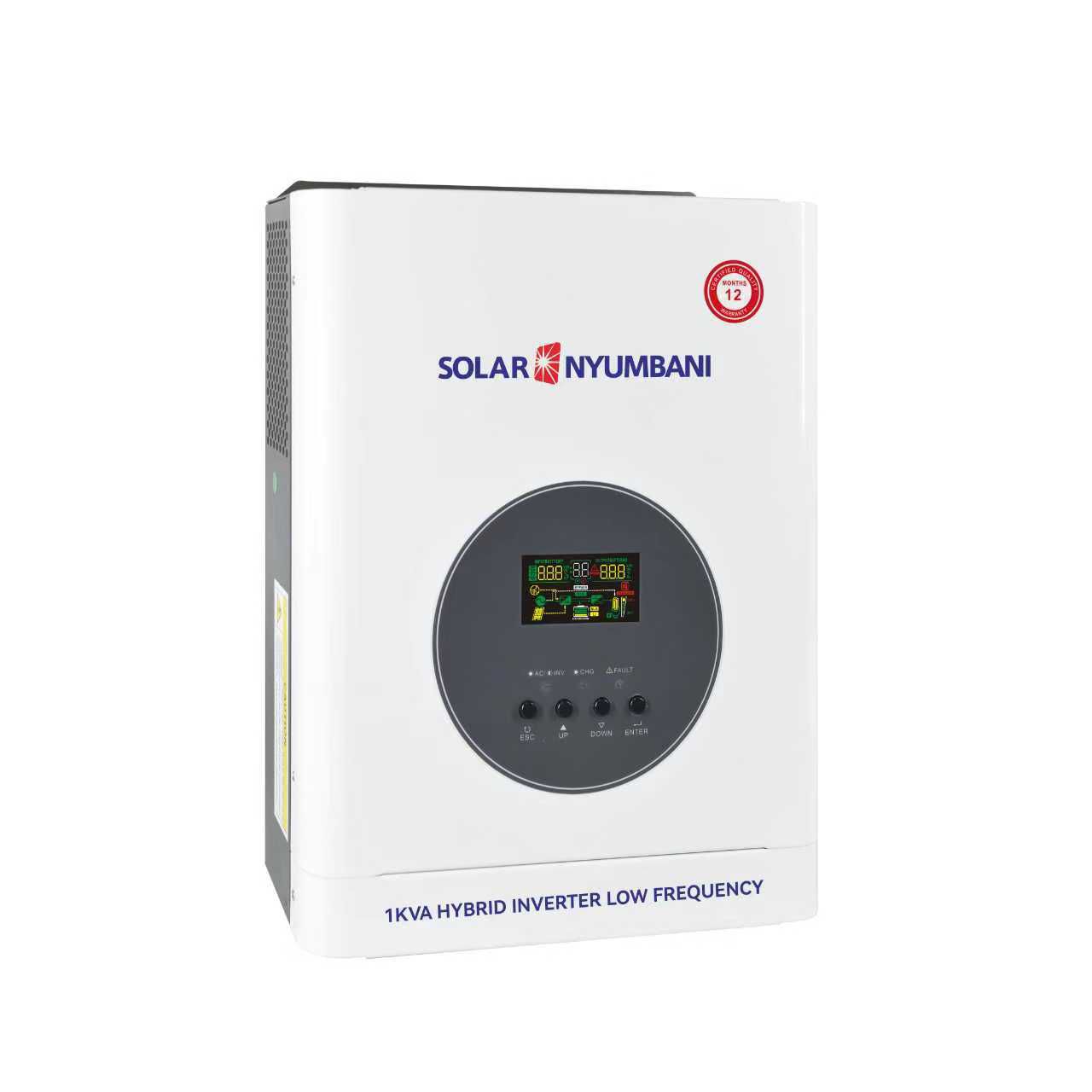
Inverters come in 12V, 24V and 48V versions. Small systems (up to about 1KVA) usually run on 12V. Larger systems use 24V or 48V to keep currents lower and cables thinner. The Nyumbani 1KVA Solar Hybrid Inverter is a 1KVA hybrid inverter that combines solar, grid and battery — suitable for lighting, TV, fans and charging devices in a small home or shop. If you need more power, the Must Hybrid Solar Power Inverter 3KVA 24V VHM MPPT 80A is a 3KVA 24V hybrid with built-in MPPT solar charger, ideal for running a fridge, several lights and electronics.
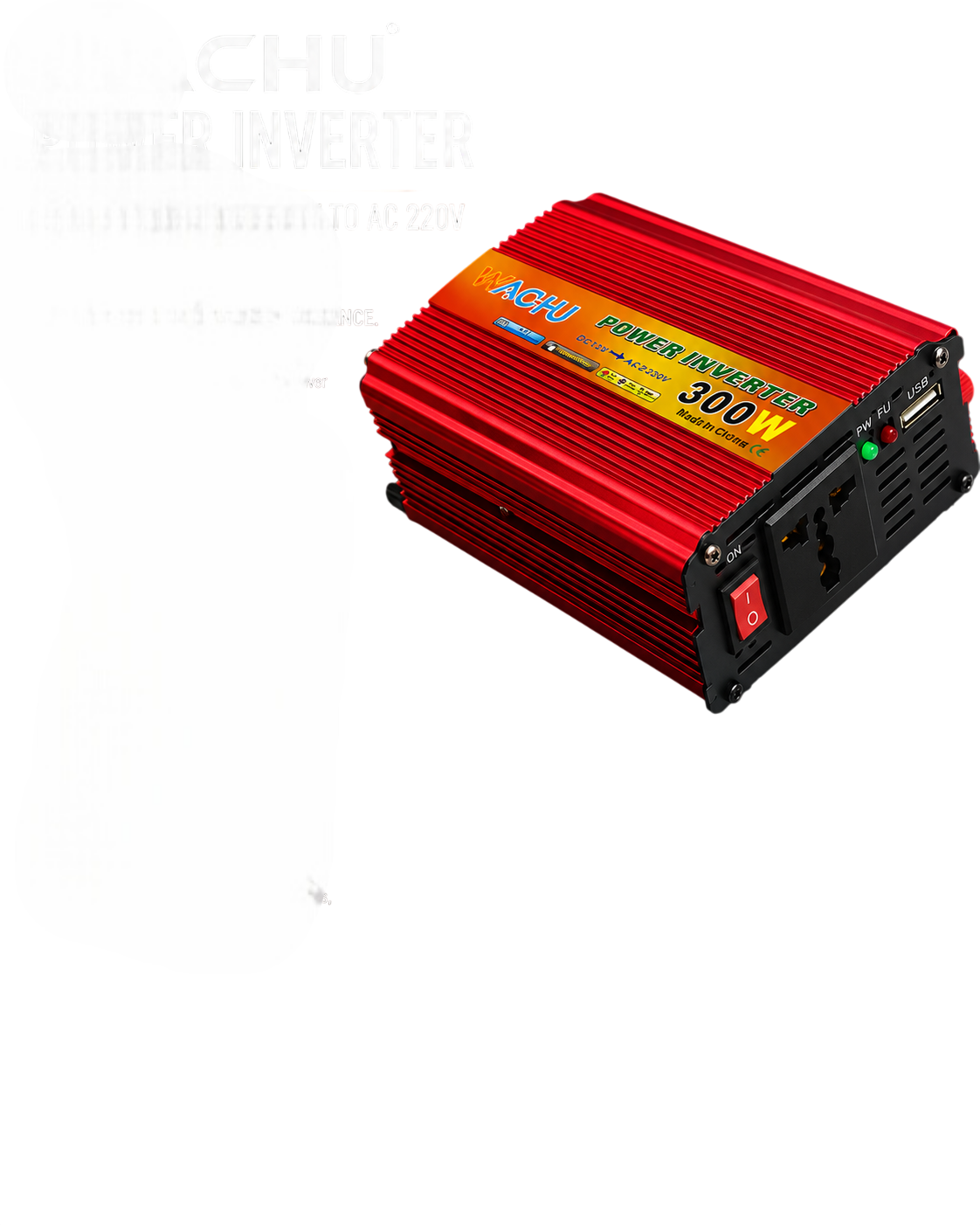
For a very basic backup — charging phones, running a laptop and a few LED bulbs — the Pure Sine Wave 300W Power Inverter is a compact 300W pure sine wave inverter that converts 12V DC to 230V AC and includes overload and short-circuit protection.
Step 4: Size the battery bank
Inverter size is only half the story; the battery bank determines how long you can run. Calculate daily energy need in watt-hours (Wh): wattage × hours used. Then divide by battery voltage to get amp-hours (Ah). For a 12V system, a 100Ah battery stores about 1,200Wh, but you shouldn't discharge lead-acid batteries below 50% regularly. Lithium (LiFePO₄) can go deeper. The Solarmax 12.8V 100Ah Lithium LiFePO4 Solar Battery is a 12.8V 100Ah lithium battery with deep discharge capability and maintenance-free operation. Pair it with a suitable inverter for a clean, compact setup.
Step 5: Efficiency and cable sizing
Inverters are not 100% efficient; expect 85–90% for good models. That means you lose a little energy as heat. Keep cables short and thick — undersized cables cause voltage drop and overheating. For a 1KVA 12V inverter, use at least 25mm² cable; for 3KVA 24V, 35mm² or thicker. Always fuse the positive cable close to the battery.
Common mistakes to avoid
- Buying too small: ignoring surge can trip the inverter every time the fridge starts.
- Buying too large: an oversized inverter wastes idle power and costs more.
- Mixing battery types or ages: always use identical batteries in a bank.
- Forgetting ventilation: inverters need airflow; don't box them in.
- Skipping safety gear: use fuses, breakers and proper earthing.
Maintenance and safety
Check connections regularly for tightness and corrosion. Keep the inverter dry and dust-free. In case of a burning smell or unusual noise, switch off and seek professional help. Never open the casing — there are dangerous voltages inside. If you're not confident, hire a qualified technician.
Summing up
Sizing an inverter is mostly addition and a little forward thinking. Add your loads, allow for surge, match voltage to your battery bank, and leave room to grow. With the right size, your backup power will be reliable and efficient for years.
Frequently asked questions
What size inverter do I need for my house in Kenya?
Add up the wattages of all appliances you want to run at once, then add 20–30% headroom and account for surge from motors. For a few lights and a TV, 300–500W is often enough; for a fridge and more, 1–2KVA is typical.
Can I run a fridge on a 1KVA inverter?
A small fridge (100–200W running) can run on a 1KVA inverter if the surge is within the inverter's peak rating. Check the fridge label for start-up amps and ensure the inverter's surge capacity covers it.
How long will a 100Ah battery last with a 300W inverter?
A 12V 100Ah lithium battery holds about 1,200Wh. Running a 300W load, you'd get roughly 3–4 hours, allowing for inverter efficiency. Lead-acid would give less usable energy to protect battery life.
Products in this guide
- Nyumbani 1KVA Solar Hybrid Inverter
- Must Hybrid Solar Power Inverter 3KVA 24V VHM MPPT 80A
- Pure Sine Wave 300W Power Inverter
- Solarmax 12.8V 100Ah Lithium LiFePO4 Solar Battery
Prices and stock change often; open each product for today's price.

Author
Solar Africa
Related posts