


By Solar Africa On 16-11-2026 at 7:43 am
Solar Kit for a Small Shop or Salon in Kenya: Sizing Guide
Why blackouts hurt small businesses
In Kenya, a power cut at the wrong moment can cost you a whole evening's sales. A kiosk goes dark, a salon can't finish a client's hair, a shop's till and fridge stop, and customers drift to the next duka that still has light. A generator solves the problem but brings fuel costs, noise and fumes. A small solar setup with battery storage keeps your essentials running quietly, and over time it costs less to run.
This guide is for shop, kiosk, salon, barbershop and small office owners who want to size a system properly. We'll separate what you must keep running from what can wait, estimate your daily energy in kWh, match that to panels, battery and inverter, and look at running costs and safety.
What you need before you shop
- A list of every appliance you want on solar, with its wattage (found on the label or in the manual).
- An estimate of how many hours each one runs on a normal day.
- A decision on what is essential during a blackout and what is optional.
- An idea of your longest blackout (a few hours or a full day).
- Your budget and a plan for what to add later.
Step 1: Separate essential loads from optional ones
Not everything needs to stay on. For most businesses the essentials are:
- Lighting – LED bulbs use about 5–15W each.
- Till or POS – a small terminal or phone-based system, typically 10–50W.
- Phone and M-Pesa charging – small but constant.
- Fridge or freezer – a small display fridge might be 150–300W running, but it cycles on and off and needs a surge at start-up.
- Salon clippers – very small, maybe 10–30W.
- Hair dryers – large, often 1000–2000W and used in short bursts.
- WiFi router – 10–20W.
Optional loads might include a TV, radio, fan or an extra fridge. Salon dryers are the hardest to put on a small solar system because they pull high power for 10–20 minutes at a time. Many salons keep dryers on grid or generator and use solar for clippers, lights and the till.
Step 2: Estimate daily energy use in kWh
For each appliance, multiply watts by hours used, then divide by 1000 to get kWh. Do this for essentials first.
Example for a small shop with 6 LED bulbs (10W each), a till (30W), a router (15W) and a small display fridge (200W running, but only about 6 hours of compressor time per day):
| Appliance | Power (W) | Hours/day | Daily energy (kWh) |
|---|---|---|---|
| 6 LED bulbs | 60 | 6 | 0.36 |
| Till/POS | 30 | 8 | 0.24 |
| Router | 15 | 10 | 0.15 |
| Small fridge | 200 (cycling) | 6 (compressor) | 1.20 |
| Total | 1.95 kWh |
Round up to 2 kWh. That's your daily target for essentials. A salon with clippers and lights might only need 0.5–1 kWh, but if you add dryers the number jumps quickly.
Remember that a fridge or freezer has a surge when the compressor starts, often 2–3 times its running wattage for a second or two. Your inverter must handle that surge.
Step 3: Size the battery for the blackout you actually face
Battery capacity is measured in amp-hours (Ah) at 12V, 24V or 48V. To find the energy stored, multiply Ah by voltage. A 100Ah 12V battery holds about 1.2 kWh of energy, but you should not drain it flat every day. For lead-acid, plan to use only about half; for lithium, you can use more.
If your essentials need 2 kWh per day and you want one evening of backup (say 5 hours), you need about 2 kWh × (5/24) ≈ 0.4 kWh, plus some margin. A 100Ah 12V battery gives roughly 0.6 kWh usable, which covers a short evening. For a full day of trading without grid, you'd need around 2 kWh usable, so a 200Ah 12V battery or a 100Ah 24V setup is more realistic.
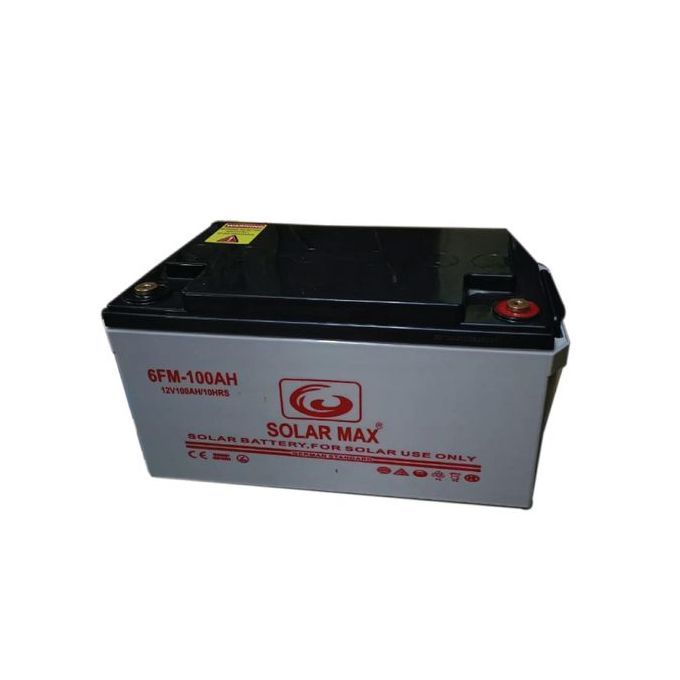
The 100ah solarmax battery is a 100Ah deep-cycle battery that can serve as the storage for a small shop's essentials. Pair it with a suitable inverter and charge controller. If you need longer backup, the 12V 150Ah/10Hr Deep Cycle Solar Battery offers 150Ah at 12V.
Step 4: Match panels and inverter
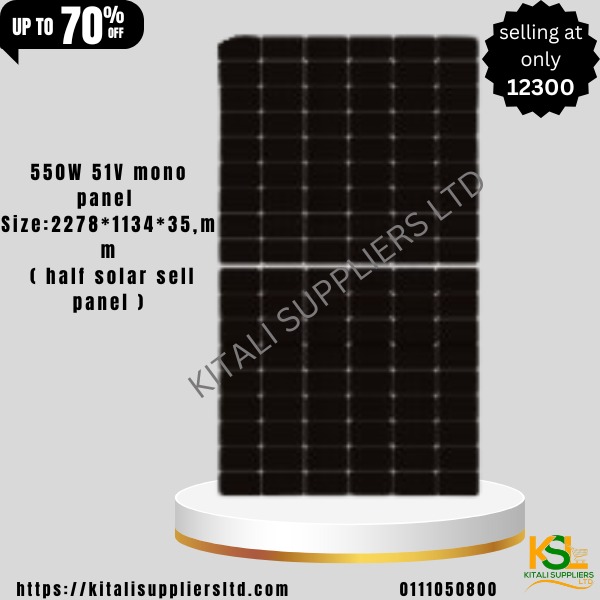
Panels recharge the battery. In Kenya you can expect roughly 4–5 peak sun hours per day on a good day. To replace 2 kWh daily, you need at least 2 kWh ÷ 4 hours = 500W of panels, and more to cover inefficiencies and cloudy days. A 300W panel is a common size for small kits.
The inverter converts battery DC to AC for your appliances. It must be pure sine wave for fridges, freezers and sensitive electronics, and it must have surge headroom. A modified sine wave inverter can damage a fridge's compressor over time.
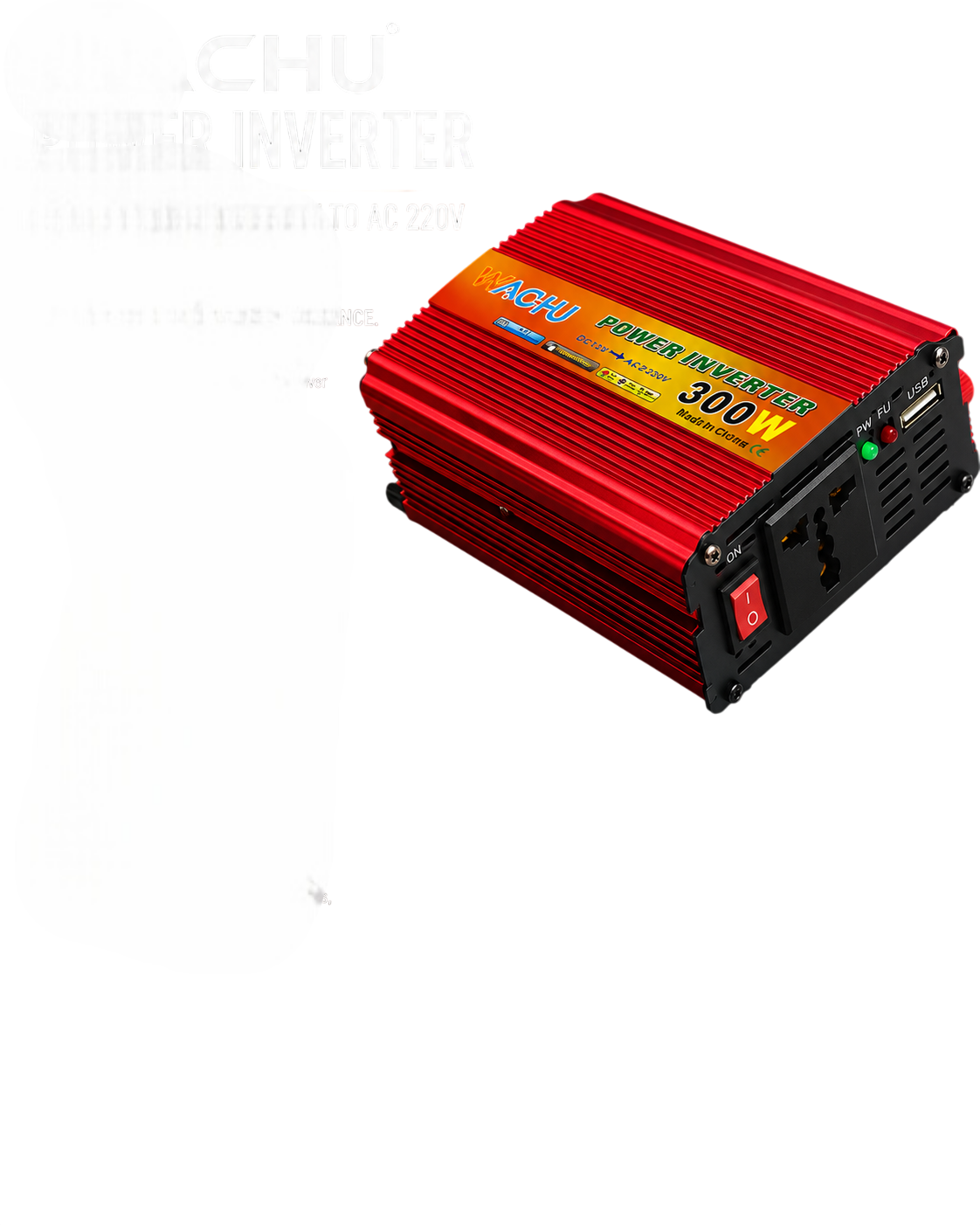
For a shop with lights, a till, a router and a small fridge, you might need a 1kW to 1.5kW pure sine wave inverter with at least 2kW surge. The Pure Sine Wave 300W Power Inverter is a 300W pure sine wave inverter, which is fine for lights, a till, a router and phone charging, but it will not start a fridge. If you want to add a fridge later, plan for a larger inverter. The 3.3kW Advanced Solar Power System is a complete 3.3kW system with a 3kVA hybrid inverter and lithium batteries, sized for bigger loads including a fridge and more.
Step 5: Phase your purchase
You don't have to buy everything at once. Start with what keeps you trading during short blackouts:
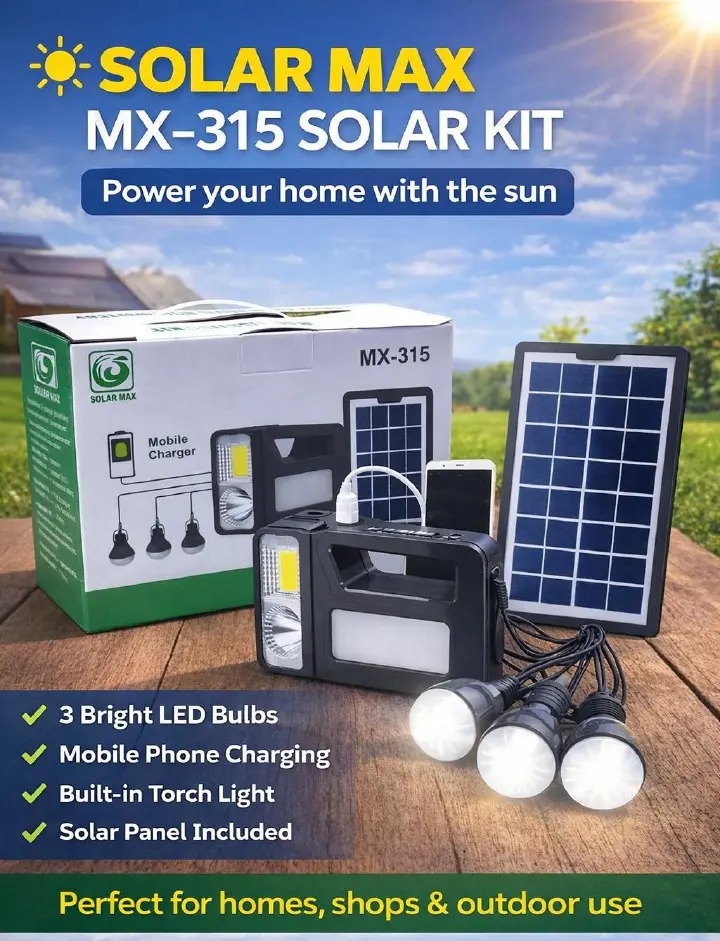
- Phase 1: Lights, phone charging and till. A small lighting kit like the Solarmax MX-315 Solar Kit gives you a solar panel, power unit and three LED bulbs. It's enough to keep a kiosk lit and phones charged, but not for a fridge or power tools.
- Phase 2: Add a battery and inverter to run a router, clippers and maybe a fan.
- Phase 3: Add a bigger inverter and more battery to run a fridge or freezer.
This staged approach spreads the cost and lets you learn your real usage before committing to a large system.
Common mistakes to avoid
- Oversizing panels but undersizing battery. Panels alone don't store energy. Without enough battery, you still go dark at night.
- Mixing a generator without a changeover switch. Back-feeding can injure you or damage the solar inverter. Use a proper changeover or keep generator and solar circuits separate.
- Forgetting your peak load at opening hours. When you open, you may switch on lights, fridge, till and clippers at once. Make sure the inverter can handle that combined load, including surges.
- Using a modified sine wave inverter for a fridge. It may run, but it will be inefficient and shorten the fridge's life.
- Ignoring the surge. A 200W fridge may need 600W for a second. An inverter rated just above running watts will trip.
Running costs and maintenance
Solar running costs are mainly battery replacement every few years and occasional panel cleaning. Unlike a generator, you don't buy fuel. Keep panels free of dust and shade, check battery terminals for corrosion, and don't let lead-acid batteries sit discharged. For a small shop, a well-sized system can pay for itself by keeping you open during blackouts.
Safety first
Use a qualified technician for wiring, especially for battery banks and inverters. Ensure proper fusing, earthing and ventilation for lead-acid batteries. Keep AC and DC cables separate and labelled. If you use a generator, install a changeover switch so it cannot feed the grid or your solar inverter.
With a clear list of essentials and a realistic daily energy estimate, you can size a solar kit that keeps your business trading through blackouts without overspending.
Frequently asked questions
What size solar system do I need for a small shop in Kenya?
Start by listing essential appliances and estimating daily kWh. A small shop with lights, a till, a router and a small fridge typically needs about 2 kWh per day, which suits a 500W–1kW panel array, a 100–200Ah battery and a 1–1.5kW pure sine wave inverter.
Can I run a fridge or freezer on a 300W inverter?
No. A 300W inverter is too small for a fridge or freezer because of the start-up surge, which can be 2–3 times the running wattage. You need a pure sine wave inverter with surge headroom, typically 1kW or more.
How long will a 100Ah battery power my shop during a blackout?
A 100Ah 12V battery holds about 1.2 kWh, but usable energy is roughly half for lead-acid. If your essentials draw 200W, it can run them for around 3 hours; for longer backup you need more battery capacity.
Products in this guide
- 100ah solarmax battery
- 12V 150Ah/10Hr Deep Cycle Solar Battery
- Pure Sine Wave 300W Power Inverter
- 3.3kW Advanced Solar Power System
Prices and stock change often; open each product for today's price.

Author
Solar Africa
Related posts