


By Solar Africa On 21-11-2026 at 9:01 am
Solar Kit Maintenance in Kenya: Monthly & Yearly Checklist
Why your solar kit needs a routine
A solar kit is not fit-and-forget. In Kenya, dust, heat and dry spells are hard on panels and batteries. A little maintenance each month saves you from the classic "it was working last week" call to the fundi. Keep the panels clean, the battery healthy and the loads within what the kit can carry.
This guide is for homes, shops and rural users who already own a full kit — panels, battery, charge controller or inverter, and wiring. You do not need to buy anything to follow it. Most of it is checking, cleaning and writing things down.
What you need
- A soft cloth or sponge and a bucket of clean water (no detergent).
- A soft brush or broom with a long handle for panels.
- A small spanner set for battery terminal nuts.
- Petroleum jelly or terminal grease.
- A notebook or phone note for a simple log.
- A torch for evening checks.
Daily checks (two minutes)
Look at the inverter or controller display. Is it charging during the day? At night, are the lights as bright as usual? Note any alarm or red light. In a shop, listen for the fan — one that never runs, or runs non-stop, is a warning.
Glance at the load. If you have added a fridge, pump or second TV since installation, the kit may now be working harder than it was sized for. That is the number one cause of early battery failure in Kenya.
Monthly checks (30 minutes)
Panels: dust and shade
Dust is the biggest thief of solar production in Kenya. Clean panels early morning or late afternoon when cool — cold water on hot glass can crack it. Use plain water and a soft cloth, never abrasive pads.
Check for shade. A single branch or new water tank shadow can cut output far more than you expect. Trim branches and move anything casting a shadow, especially between 10am and 3pm. Check that mounting bolts are tight and the glass is not cracked.
Battery terminals and water levels
Switch off the inverter and controller before touching battery terminals. Check that terminals are tight and not corroded. Clean white or green powder with water and a brush, dry it, and apply a thin layer of petroleum jelly.
For flooded lead-acid batteries, check the water level — plates should be covered, but do not overfill. Use distilled or clean rainwater, never borehole water. Maintenance-free gel batteries do not need water; do not open them.
Feel the battery casing. Warm is normal during charging; hot is not. A battery that is hot, smells of sulphur or bulges needs a technician.
Inverter and controller
Check the fan and vents. Dust blocks airflow and causes overheating. Vacuum or brush the vents gently and make sure the inverter has space around it. Read any error code and note it with the time — common ones are low battery, overload, over-temperature and short circuit. A code that repeats is your clue.
Cables and MCBs
Look for cuts, rodent damage or loose ties. Check that the MCB or fuse has not tripped. If a breaker keeps tripping, do not keep resetting it — something is drawing too much or there is a short.
Load discipline
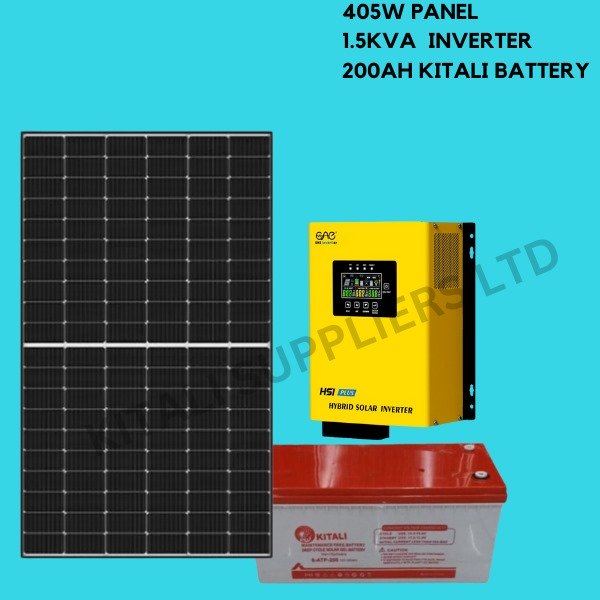
Know what your kit can carry. A 300W inverter runs lights, a TV and phone chargers, not a kettle or pump. A 1kVA hybrid inverter suits small household loads like lighting, TV, fans and charging. If you need a pump or fridge, the kit must be sized for it from the start. Adding a big load later is the usual reason a healthy kit starts failing.
Record keeping
Keep a simple log: date, what you checked, any alarm code, and the battery voltage if your display shows it. This helps a technician find faults fast.
Yearly checks
- Have a technician tighten all connections and test the charge controller settings against the battery type.
- Check panel mounting against wind — loose bolts are a danger in storms.
- Test battery capacity. If lights that lasted all evening now dim after two hours, the battery is ageing.
- Inspect earthing and the DC breaker.
- Review your loads for the year.
Common Kenyan failure points
| Problem | Likely cause | What to do |
|---|---|---|
| Panels not charging | Dust, shade, loose MC4 connector | Clean, clear shade, check plugs |
| Battery dead by morning | Old battery, too much evening load | Reduce load, test battery |
| Inverter beeps and cuts off | Overload or low battery | Switch off big loads, check charging |
| Hot terminals | Loose connection | Switch off, tighten, grease |
| Controller shows low charge | Undersized or dirty panel | Clean, or add panel if undersized |
When to replace a part, not the whole kit
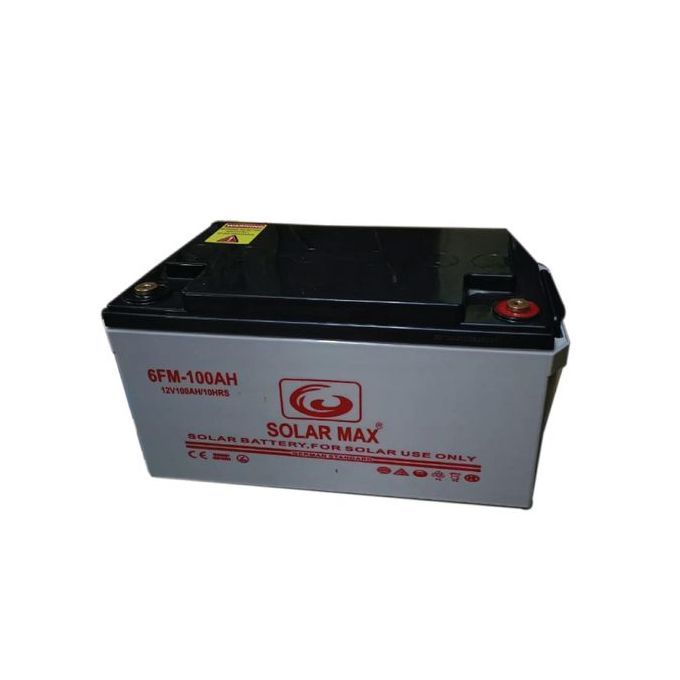
Most solar problems are one part, not the whole system. If the battery is old and will not hold charge, replace it. A 100Ah deep-cycle, 150Ah deep-cycle or 100Ah lithium battery with smart BMS can be a straight swap if voltage and capacity suit your kit. Lithium is lighter and maintenance-free; lead-acid is cheaper upfront but needs water checks.
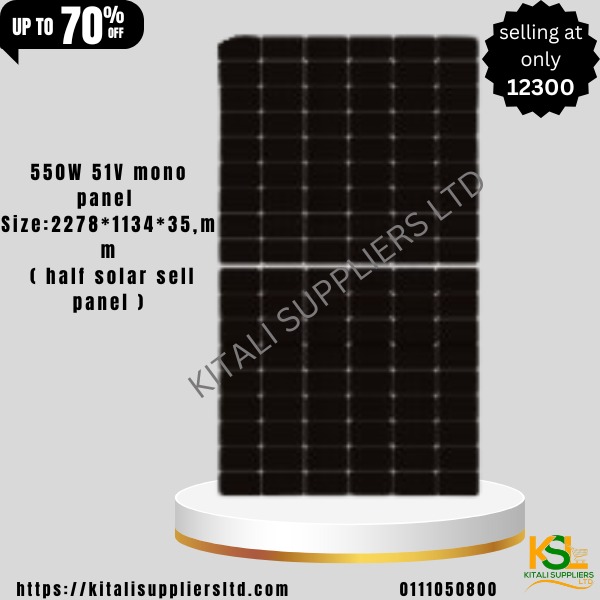
If a panel is cracked or producing almost nothing, replace that panel. A 60W or 270W panel can be added if your controller can handle the extra current — check the rating first.
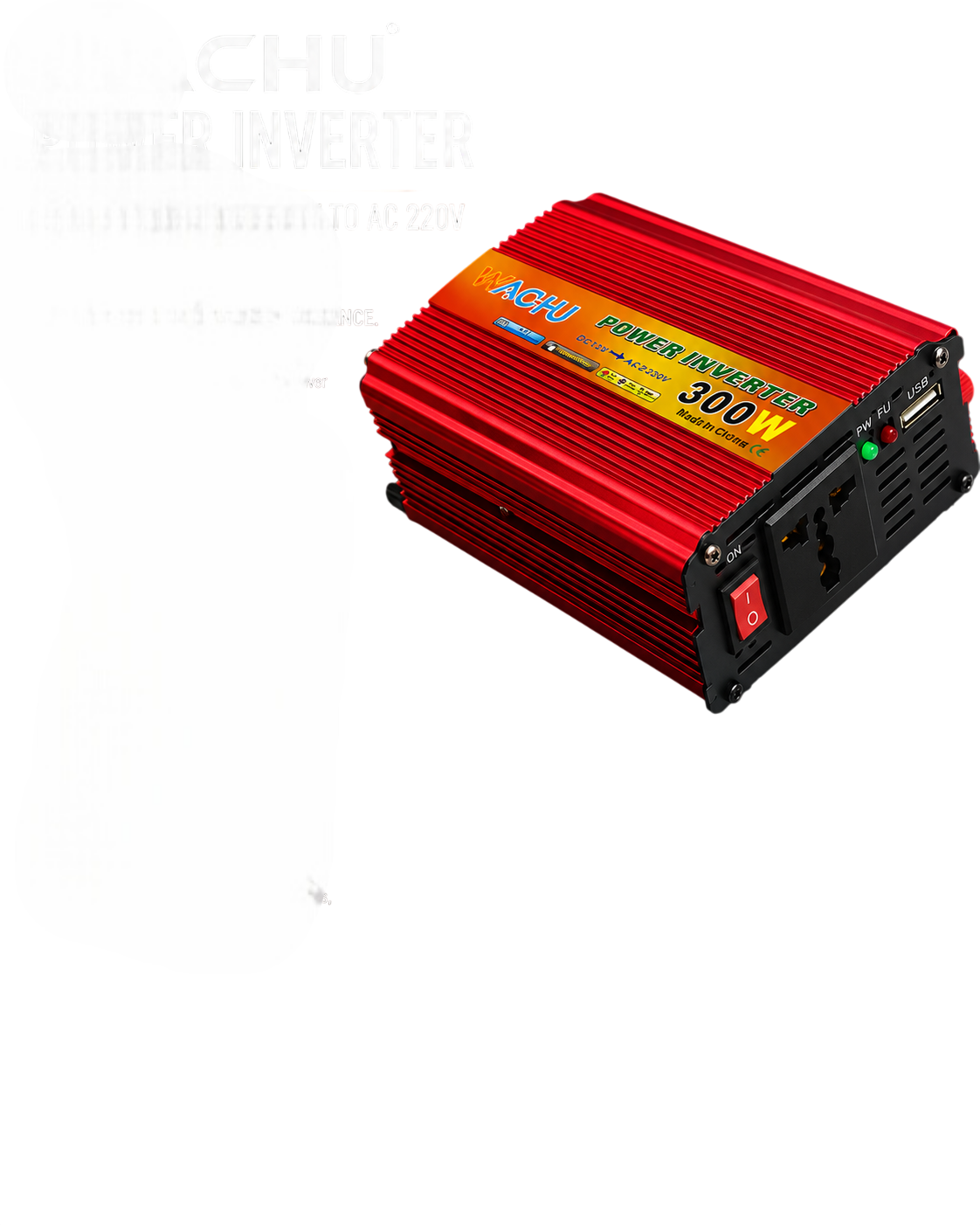
If the inverter is dead, replace it. The Yachu 300W 12V Pure Sine Wave Inverter is a 300W pure sine wave unit for lights, TV, router and fans. The Nyumbani 1KVA Solar Hybrid Inverter is a 1kVA hybrid inverter for a small home or shop. Match the replacement to your battery voltage and loads.
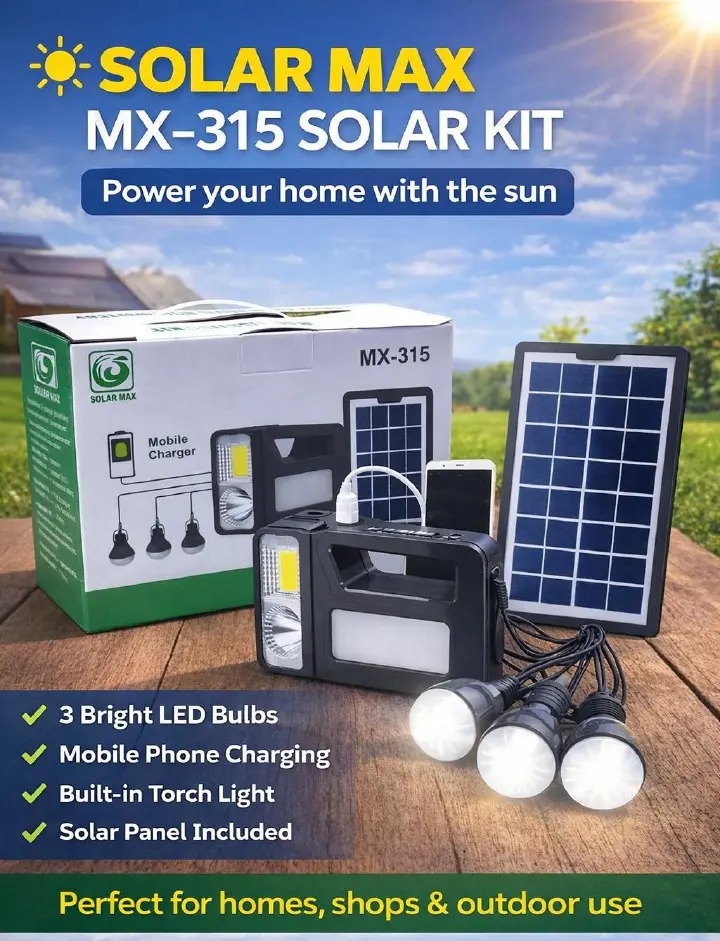
If the whole kit is beyond repair, a new full kit may be cheaper than piecemeal repairs. The Solarmax MX-315 Solar Home Lighting Kit with 3 LED Bulbs is a solar home lighting kit with three LED bulbs, and the 100W Fullkit With 100w Panel, 80ah Battery, 300Va Inverter, 10A is a 100W full kit with panel, battery, inverter and controller. Neither suits a large hybrid system, but they fit small homes and shops starting again.
Running costs and safety
Solar maintenance is mostly time, not money. The real costs are replacements: batteries every few years, occasionally a controller or inverter. Cleaning monthly is the cheapest habit you can build. A dirty panel can lose 10–20% of output in dusty conditions, and that lost energy is what ages a battery.
Do not wash panels with a pressure washer. Do not open sealed batteries. Do not add a bigger fuse to stop a breaker tripping. If unsure, switch everything off and call a technician. Batteries can spark and DC wiring can burn.
Frequently asked questions
Why is my solar kit not charging?
Check the panel first: dust, shade or a loose connector are the usual causes. If the panel is clean and connected, the controller or battery may be the problem.
How often should I clean solar panels in Kenya?
Clean them monthly in dusty areas, and after long dry spells. Early morning or late afternoon is best, using plain water and a soft cloth.
Can I replace just the battery in my solar kit?
Yes, if the battery voltage and capacity match your kit and controller. Replace the battery alone when the panels and inverter are still working well.
Products in this guide
- Yachu 300W 12V Pure Sine Wave Inverter
- Nyumbani 1KVA Solar Hybrid Inverter
- Solarmax MX-315 Solar Home Lighting Kit with 3 LED Bulbs
- 100W Fullkit With 100w Panel, 80ah Battery, 300Va Inverter, 10A
Prices and stock change often; open each product for today's price.

Author
Solar Africa
Related posts