


By Solar Africa On 16-11-2026 at 7:43 am
How Many Batteries for a Night of Power? Kenyan Sizing Guide
When the grid goes down at 7pm and comes back at 6am, your battery bank has to carry everything you switch on. Buy too little and you'll drain the batteries flat night after night, which is the fastest way to kill them. Buy too much and you've tied up money in capacity you never use. This guide shows you how to work out the right size.
What you need
- A list of the appliances you must run at night (not everything in the house).
- The wattage of each appliance — check the label or manual.
- How many hours each one runs after dark.
- Your battery type and its usable depth of discharge.
- A pencil and paper, or the calculator on your phone.
Step 1: Add up your night-time load
Walk through the house or shop and write down only what you actually use between sunset and sunrise. Typical figures are approximate:
- LED bulb: 5–10W
- Ceiling fan: 60–75W
- TV (32–43 inch): 50–100W
- Wi-Fi router: 10–15W
- Phone charger: 5–10W
- Fridge/freezer: 100–150W running, but it cycles on and off
- Security light: 10–20W
- Small chest freezer (shop): 150–200W
For a fridge or freezer, don't just multiply the running watts by the hours. The compressor switches on and off, so a reasonable estimate is about one-third of the time in a cool room, more in a hot kitchen. A 150W fridge running 10 hours might only draw for 3–4 hours in total.
Step 2: Convert to watt-hours per night
Multiply each appliance's watts by the hours it runs, then add them up. This gives you watt-hours (Wh) per night. For the fridge, use the estimated running hours, not the clock hours.
Step 3: Allow for inverter losses
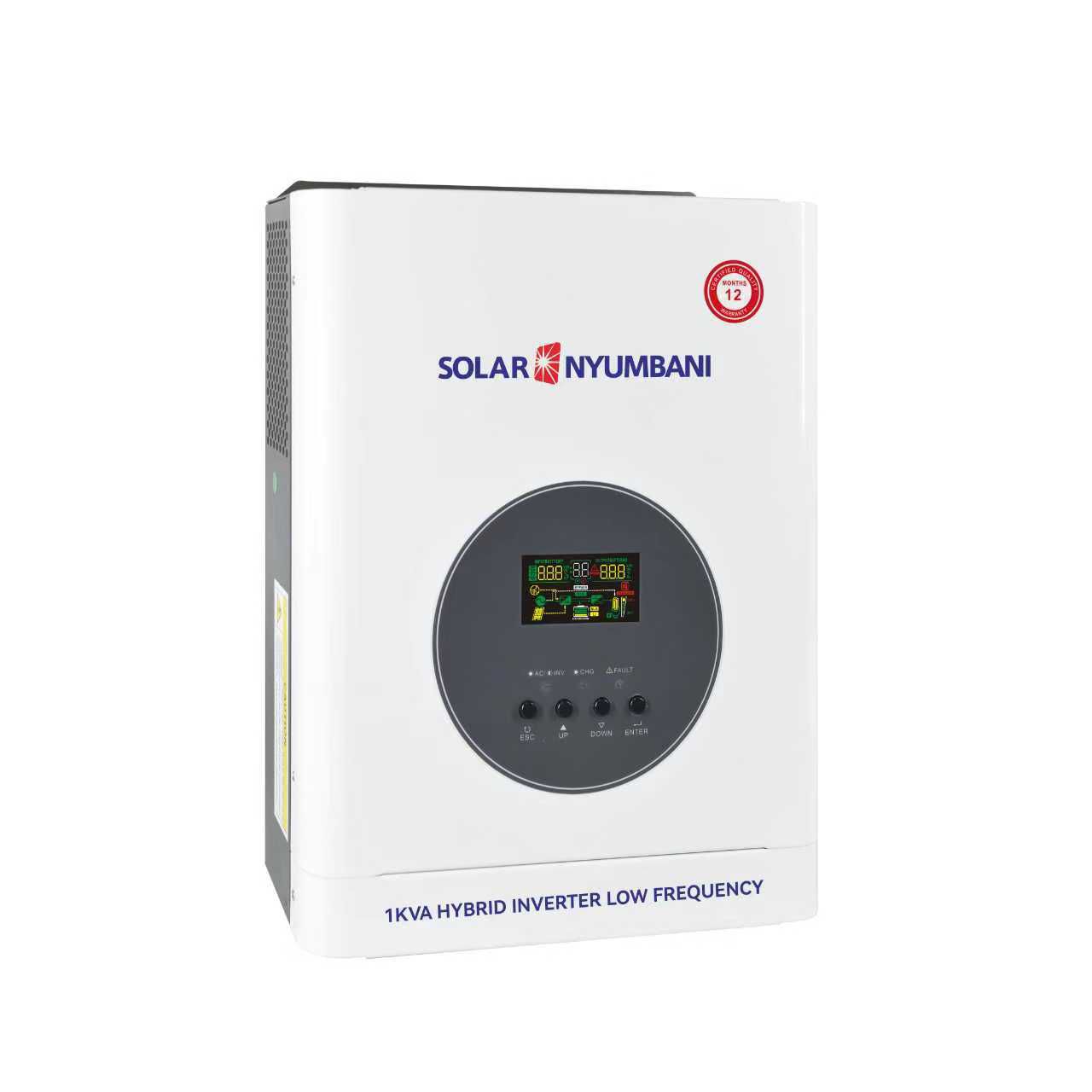
Inverters are not perfect. A pure sine wave inverter typically loses 10–15% of the energy as heat. So add 15% to your watt-hour total. If you have a 12V system and run a 1KVA inverter like the Nyumbani 1KVA Solar Hybrid Inverter, that loss is already included in the sizing.
Step 4: Choose your depth of discharge
Lead-acid batteries (the common 100Ah/150Ah/200Ah solar types) should not be drained below 50% regularly, or their life shortens dramatically. Lithium (LiFePO4) can safely go to 80–90% depth of discharge. This is the single biggest difference between the two technologies.
So your required battery capacity in amp-hours at 12V is:
(Nightly Wh ÷ 12) ÷ usable depth of discharge
For a 24V system, divide by 24 instead of 12.
Worked example: a typical Kenyan home
Suppose you want to run:
- 6 LED bulbs at 7W for 5 hours = 210Wh
- 1 TV at 80W for 4 hours = 320Wh
- 1 fan at 60W for 6 hours = 360Wh
- Wi-Fi router at 12W for 8 hours = 96Wh
- Phone charging at 10W for 3 hours = 30Wh
Total = 1,016Wh. Add 15% inverter loss = about 1,170Wh.
Now divide by battery voltage (12V): 1,170 ÷ 12 = 97.5Ah. That's the usable capacity you need.
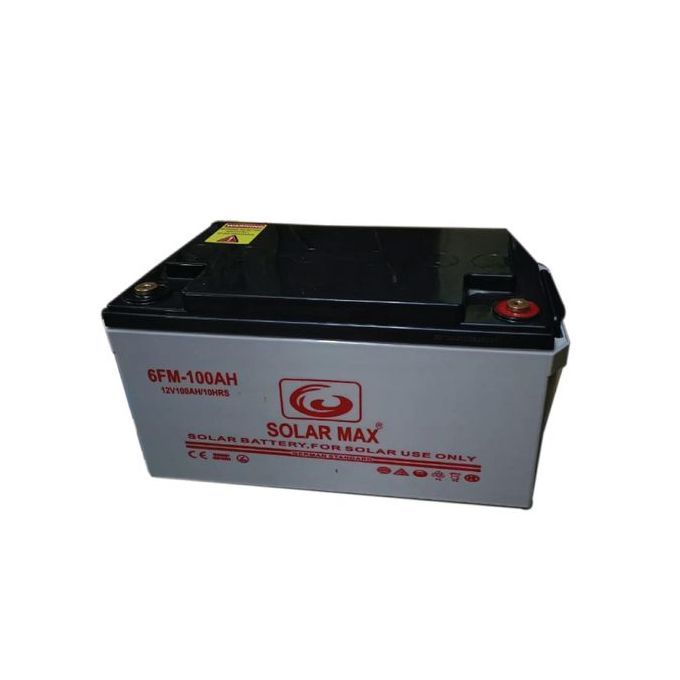
With lead-acid at 50% depth of discharge, you need about 195Ah of battery capacity. So two 100Ah batteries, or one 200Ah, or a single 150Ah plus a small top-up — the 12V 150Ah/10Hr Deep Cycle Solar Battery is a 150Ah deep-cycle unit, so two of those would give 300Ah and plenty of margin, though one alone would be borderline.
With lithium at 80% depth of discharge, 97.5 ÷ 0.8 = 122Ah. A single 100Ah lithium like the Solarmax 12.8V 100Ah Lithium LiFePO4 Solar Battery is close but slightly short; two would be comfortable. The YACHU 100Ah 12.8V Lithium Battery is another 100Ah lithium option with a smart BMS.
Worked example: a small shop
A duka running a security light (15W for 10 hours = 150Wh), a chest freezer (180W, estimated 4 hours running = 720Wh), and two LED bulbs (10W each for 6 hours = 120Wh). Total = 990Wh. Add 15% = 1,139Wh.
At 12V that's 95Ah usable. For lead-acid you need about 190Ah, so two 100Ah batteries or a 200Ah. For lithium, 95 ÷ 0.8 = 119Ah, so a 120Ah lithium or two 100Ah units.
Sizing table
| Nightly load (Wh after losses) | Usable Ah needed at 12V | Lead-acid bank (50% DoD) | Lithium bank (80% DoD) |
|---|---|---|---|
| 500 | 42 | ~85Ah | ~53Ah |
| 1,000 | 83 | ~166Ah | ~104Ah |
| 1,500 | 125 | ~250Ah | ~156Ah |
| 2,000 | 167 | ~334Ah | ~209Ah |
These are rough guides. Always round up, never down.
Inverter sizing matters too
The battery bank stores energy; the inverter delivers it. A 300W inverter like the Pure Sine Wave 300W Power Inverter can run lights, TV, router and phone chargers, but it will not start a fridge or a pump. Those need a larger inverter and a battery bank that can deliver the surge current. If you're planning a fridge, choose an inverter rated for at least double the fridge's running watts, and make sure the battery can supply that current.
Why oversizing wastes money and undersizing kills batteries
Oversizing means you buy capacity you rarely use. Lead-acid batteries that sit partially charged sulphate and lose capacity. Lithium batteries are more forgiving but still cost more upfront for no benefit. Undersizing is worse: you drain the bank below 50% every night, the battery heats up, plates warp, and what should last three years dies in eighteen months. A correctly sized bank is the cheapest battery you'll ever buy.
Common mistakes
- Counting the fridge as running 10 hours straight.
- Forgetting the inverter losses.
- Using the wrong depth of discharge for your battery type.
- Mixing old and new batteries in the same bank.
- Forgetting that 24V systems need half the Ah of 12V systems for the same energy.
Maintenance and safety
Lead-acid batteries need ventilation, clean terminals and occasional equalisation charging. Keep them upright and away from sparks. Lithium batteries are maintenance-free but should not be charged below 0°C. Use a properly rated fuse between the battery and inverter, and never undersize the cable — thin cables waste power and get hot. If you're not confident, have a qualified technician check the installation.
Frequently asked questions
How many 200Ah batteries do I need to run a fridge overnight in Kenya?
A typical 150W fridge running for about 4 hours overnight uses roughly 600Wh. After inverter losses, that's about 690Wh. At 12V and 50% depth of discharge, you need roughly 115Ah of usable capacity, so one 200Ah lead-acid battery is enough. If you use lithium, one 100Ah battery can cover it.
Can I mix old and new batteries in my solar bank?
No. Mixing old and new batteries of the same type causes the weaker ones to drag down the stronger ones and shortens the life of the whole bank. Replace the whole set at once.
How long will a 100Ah battery last during a power outage?
It depends on your load. A 100Ah lead-acid battery gives about 50Ah usable, which is 600Wh at 12V. That will run a few LED lights, a TV and a router for an evening, but not a fridge. A 100Ah lithium gives about 80Ah usable, roughly 1,000Wh.
Products in this guide
- Nyumbani 1KVA Solar Hybrid Inverter
- 12V 150Ah/10Hr Deep Cycle Solar Battery
- Solarmax 12.8V 100Ah Lithium LiFePO4 Solar Battery
- YACHU 100Ah 12.8V Lithium Battery
Prices and stock change often; open each product for today's price.

Author
Solar Africa
Related posts