


By Solar Africa On 17-11-2026 at 7:24 am
Solar Borehole Pump Backup: Cloudy Weather Guide
If your farm or home depends on a borehole, a week of heavy cloud can leave your tank dry and your animals thirsty. Solar pumps are brilliant in the sunshine, but they slow down or stop when the sky turns grey. The good news is that with a bit of planning, you can keep water flowing even through a cloudy spell.
What you need
- A clear idea of your daily water need – in litres, for household, livestock and crops.
- Your borehole details – total head (depth to water plus height to tank) and yield.
- A storage tank sized for at least 2–3 days of normal use.
- A solar array with some spare capacity – typically 20–30% more panel wattage than the pump needs at full sun.
- A backup plan – either a small generator to run the pump, or a battery/inverter system for short gaps.
- Basic safety gear – a controller with dry-run protection, and proper wiring.
How a solar water pumping setup works
Solar panels make DC electricity, which a controller feeds to a submersible pump down the borehole. The pump lifts water to a tank, and from there gravity or a small pressure pump takes it where you need it. On a bright day, the system may pump for 5–7 hours; on a cloudy day, output can drop to 10–30% of that.
The key is to treat the tank as your real battery. Store enough water during good days, and you ride out the cloudy ones.
Sizing the pump and panels with headroom
Start with your daily water need. For example, a household with 20 cattle might need 1,000–1,500 litres a day. Your pump must lift that from the borehole to the tank, against the total head.
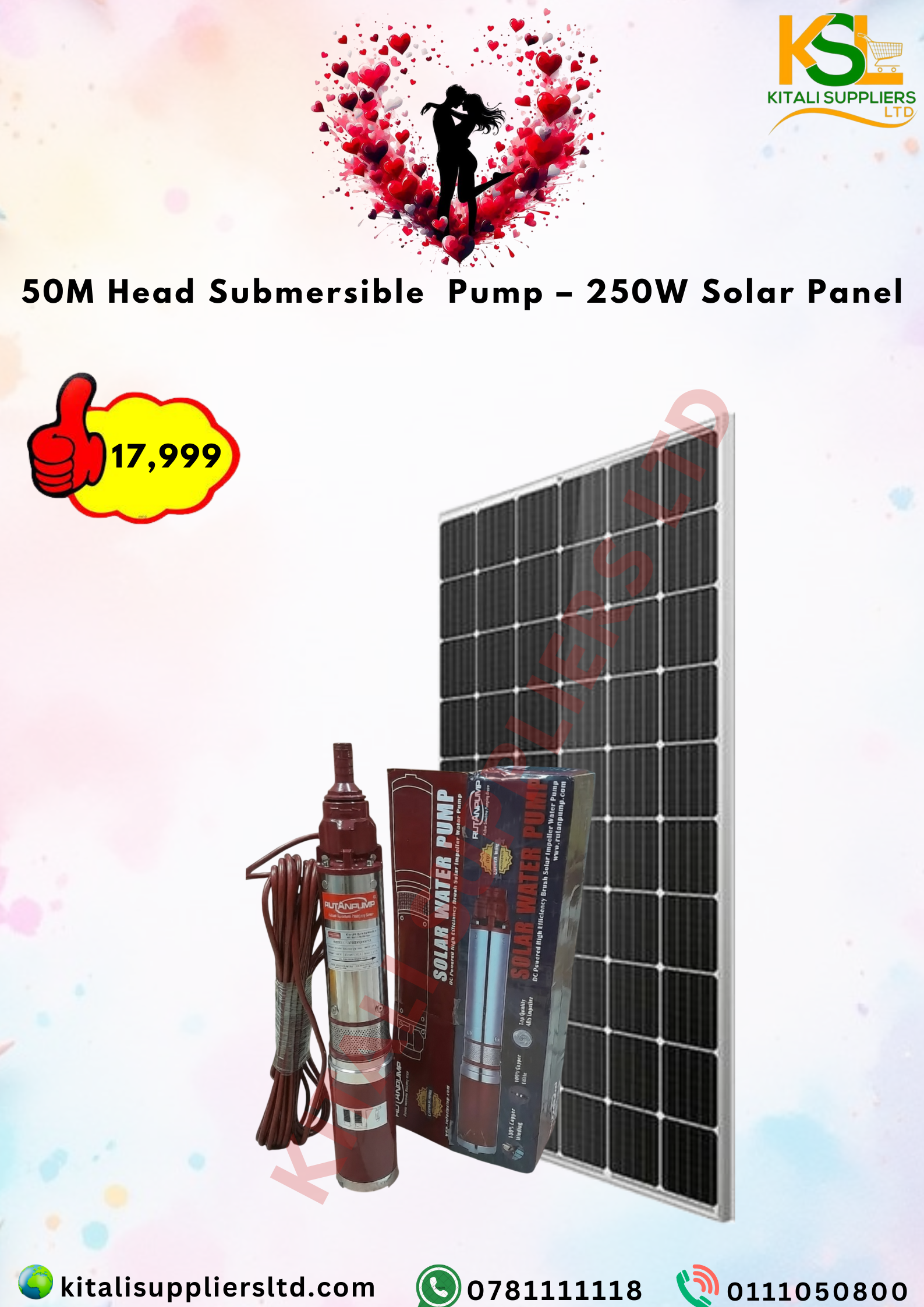
Manufacturers rate pumps at a maximum head and a flow at that head. A 250W pump rated to 50 metres, like the Rutan 50M Head 250W Solar Submersible Water Pump, can deliver a modest flow at that height. If your borehole is shallower, the same pump gives more litres per hour. Use the pump's performance curve to estimate daily output, then add 20–30% extra panel wattage to cover cloudy days and panel ageing.
Many kits come with a panel and controller. The Rutan 24V 250W 50m Solar Submersible Pump System is a complete 24V system with a 250W pump, a 300W panel and a float switch for automatic tank filling. That float switch is valuable: it stops the pump when the tank is full and protects against dry running.
Simple sizing table
| Daily need (litres) | Approx. panel wattage (bright sun) | Tank size (2–3 days) |
|---|---|---|
| 500 | 200–300W | 1,000–1,500L |
| 1,000 | 400–600W | 2,000–3,000L |
| 2,000 | 800–1,200W | 4,000–6,000L |
Figures are typical approximations; actual sizing depends on head, pump efficiency and location.
Backup options: generator vs battery vs bigger tank
1. A bigger tank is often the cheapest backup
If you have space and can elevate a tank, adding storage is usually the most cost-effective way to bridge cloudy spells. A tank that holds three days' water means the pump can skip a day or two without anyone going short. It also lets you run the pump only when the sun is strong, rather than all day.
2. Generator backup for deep boreholes or high demand
When the tank runs low and the forecast is grim, a generator can run the pump directly. You need a generator whose continuous output comfortably exceeds the pump's starting and running wattage. For a 250W pump, a 1KW generator may be marginal; a 3KVA unit like the KMAX ITALY 3KVA Petrol Generator gives more headroom and can also power other farm equipment. Remember that generators need fuel, servicing and safe siting away from livestock and living quarters.
3. Battery/inverter assist for short gaps
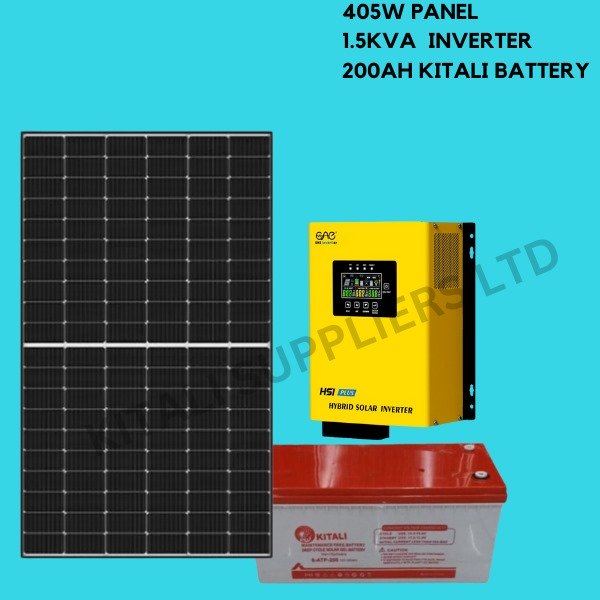
A battery and inverter can run a small AC pump for a few hours, but it is not a substitute for a week of cloud. It suits short outages or topping up the tank in the evening. You would need a battery bank sized to the pump's load and an inverter rated for it. For a 250W pump, a 500VA inverter like the Solarmax 500VA 12V Modified Sine Wave Power Inverter is too small to start it reliably; you would need a larger pure sine wave inverter and a deep-cycle battery. For most borehole pumps, battery assist is less practical than a generator or a bigger tank, unless the pump is very small.
How to store water so the pump doesn't run all day
- Size the tank for at least two days of normal use – three is better.
- Use a float switch or level controller to stop the pump when the tank is full.
- Site the tank high enough to gravity-feed troughs or taps, avoiding a second pump.
- Insulate or shade the tank to keep water cool and reduce evaporation.
- Check for leaks regularly – a dripping trough can waste hundreds of litres a week.
Common mistakes
- Under-sizing the array. Panels are rated at standard test conditions; real-world output is lower, especially in heat and haze.
- Forgetting the head. A pump that lifts 20 metres will not push water 40 metres up a hill.
- No dry-run protection. If the borehole yield drops, the pump can burn out. A float switch or controller with dry-run protection is essential.
- Ignoring the tank. Without storage, you are forced to run the pump whenever the sun shines – or not at all.
- Mismatched generator. A generator that is too small will stall or trip when the pump starts.
Maintenance and safety
Check panel cleanliness monthly – dust and bird droppings can cut output noticeably. Inspect wiring for rodent damage. Keep the controller dry and ventilated. Have the pump serviced according to the manual. Never work on the pump or wiring while it is energised, and ensure the generator is earthed and run outdoors, away from windows and livestock.
With sensible storage, a slightly oversized array, and a simple backup plan, your borehole can keep delivering through the cloudy weeks – without running the pump all day.
Frequently asked questions
Can a solar borehole pump work on cloudy days?
Yes, but output drops dramatically. On a heavily overcast day, a solar pump may produce only 10–30% of its sunny-day flow, so you need extra panels or stored water to keep supply steady.
How do I size a generator to back up my solar water pump?
Choose a generator whose continuous output comfortably exceeds the pump's running wattage, plus a margin for starting surge. For a 250W pump, a 1KW generator may be marginal; a 3KVA unit gives useful headroom.
Is a battery better than a bigger tank for cloudy weather?
For most borehole pumps, a bigger tank is cheaper and more reliable. Batteries suit short gaps or very small pumps, but a week of cloud would require an expensive battery bank.
Products in this guide
- Rutan 50M Head 250W Solar Submersible Water Pump
- Rutan 24V 250W 50m Solar Submersible Pump System
- KMAX ITALY 3KVA Petrol Generator
- Solarmax 500VA 12V Modified Sine Wave Power Inverter
Prices and stock change often; open each product for today's price.

Author
Solar Africa
Related posts