


By Solar Africa On 16-11-2026 at 7:42 am
Choosing an Irrigation Pump in Kenya: Solar, Petrol or Electric?
If you are irrigating a small plot, a shallow well or a water pan, the pump you choose affects your costs, workload and peace of mind for years. This guide covers matching the power source to your situation, sizing the pump, estimating running costs and avoiding mistakes that shorten a pump's life. It is written for Kenyan smallholder farmers and horticulture growers, including those far from mains power.
What you need: a quick checklist
- Water source: shallow well, borehole, river, water pan or tank. Note the depth to water and how far you need to push it.
- Daily water need: roughly how many litres per day for your plot (see the table below).
- Power option: solar, petrol or mains electric. Consider fuel availability and grid reliability.
- Pump size: flow rate (litres per hour) and head (metres) that suit your source and delivery point.
- Pipes and fittings: suction and delivery pipes, connectors, foot valve if needed.
- Storage: a tank to buffer supply, especially with solar.
- Protection: dry-run protection, float switch, or a simple schedule so the pump never runs dry.
- Budget: purchase price plus running and maintenance costs.
Match the power source to your water and situation
Solar pumps: best where the sun is strong and the need is steady
Solar pumps suit off-grid locations with reliable sun. They have no fuel costs and need little maintenance, but output varies with sunlight, so you usually need a storage tank to keep water flowing when it is cloudy. They work well for shallow wells, boreholes and water pans where you can pump during the day and store water for evening irrigation.
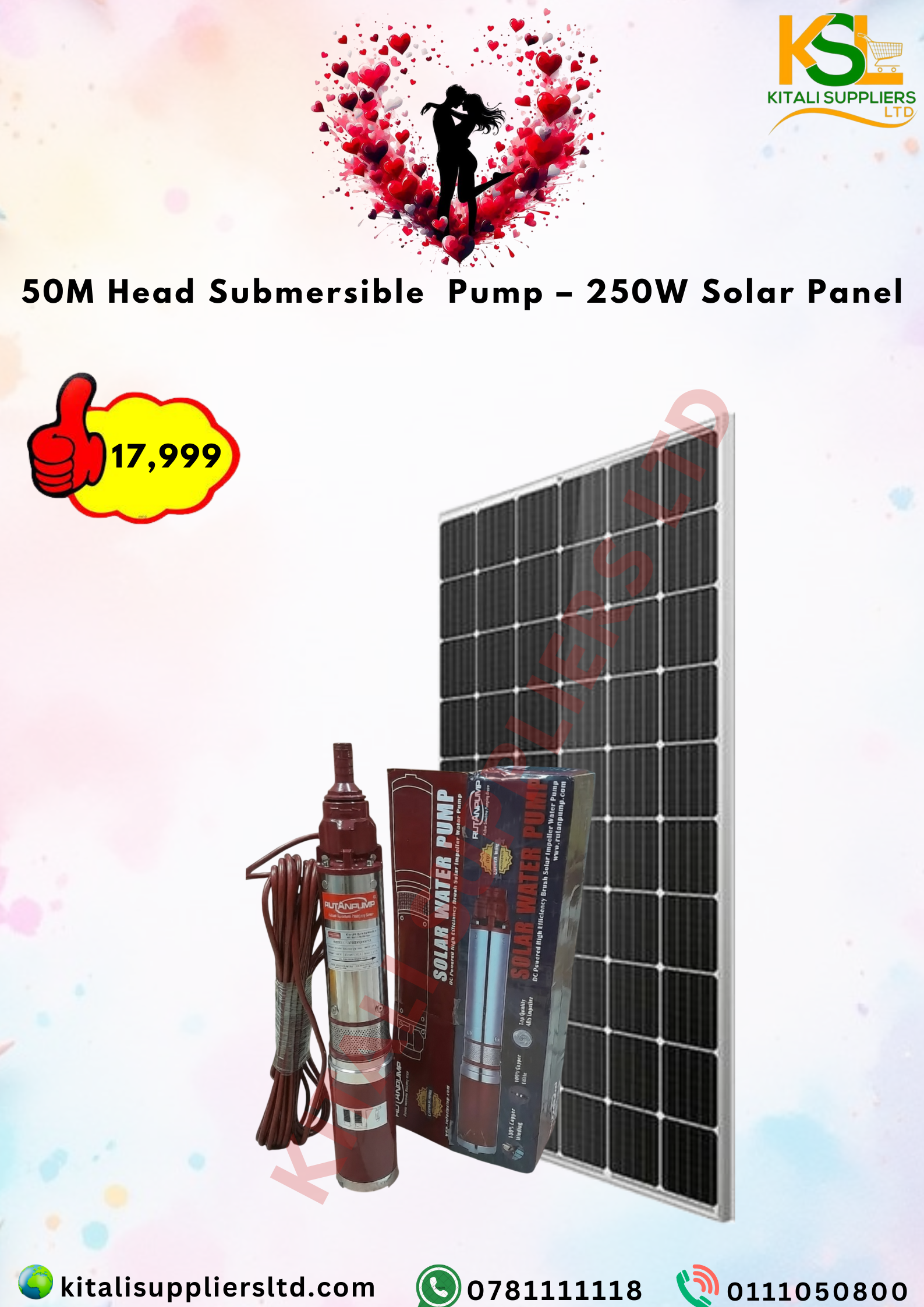
For a deep well or borehole with a high lift, a submersible solar pump is the natural fit. The 50M Head Solar Submersible Water Pump is a 250W panel-powered submersible pump with a maximum head of 50 metres, designed for boreholes and wells. If you prefer a complete kit with automatic tank filling, the Rutan Solar DC Submersible Pump System with 300W Solar Panel & Float includes a 300W solar panel, a 24V pump and a float switch, with a 50-metre head capacity.
Petrol pumps: portable and powerful, but thirsty
Petrol pumps are easy to move between plots and deliver high flow and good suction. They suit irrigation from a river or water pan that moves, or sites with no sun and no grid. The drawbacks are fuel costs, regular servicing, noise and fumes, so run them outdoors.
A typical petrol pump set comes with suction and delivery pipes. The 2″ Honda Water Pump Set is a 2-inch Honda water pump set that includes a 100-metre delivery pipe, a 4-metre suction pipe and two pipe connectors, suitable for irrigation and water transfer. A petrol pump is not submersible; it sits beside the water source and lifts water by suction, so suction lift is limited (typically around 6–7 metres in practice).
Electric pumps: cheap to run if the grid is reliable
With a reliable mains connection, an electric pump is often the cheapest to run per litre. But many rural plots have no grid, or frequent outages. A generator or battery/inverter setup can power an electric pump, though fuel or battery replacement costs add up. For small plots, a petrol pump is usually simpler than a generator plus electric pump.
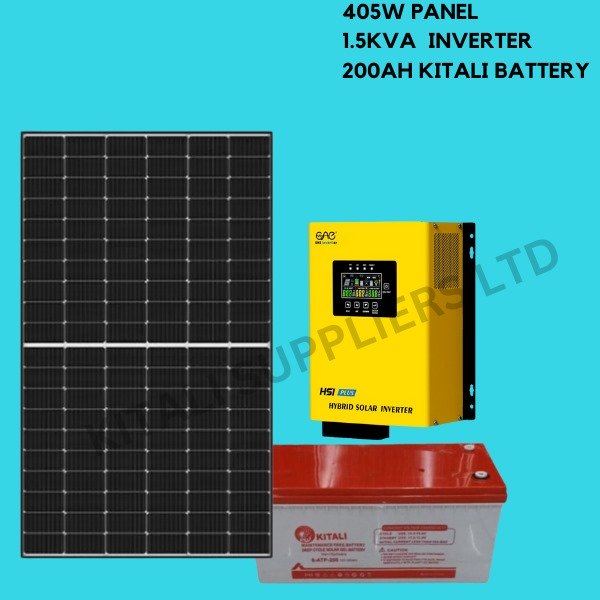
A solar home system with a battery may run a small pump, but check the pump's starting surge. The 100W Fullkit With 100w Panel, 80ah Battery, 300Va Inverter, 10A is a 100W solar kit with an 80Ah battery and a 300VA inverter, intended for lighting and small appliances; it will not start a large pump.
Size the pump to your plot and water need
Pump sizing has two parts: flow rate and head. Flow rate is how much water you need per day, divided by the hours you are willing to pump. Head is the total height the pump must push water, including the lift from the water source, the height to the delivery point, and friction losses in pipes.
Use this rough table to estimate daily water needs for common crops. Your soil, climate and crop stage will change these figures.
| Crop / use | Approximate daily water need | Notes |
|---|---|---|
| Vegetables (small plot, 0.25 acre) | 2,000–4,000 litres | Drip or sprinkler; more in hot weather |
| Maize or beans (1 acre) | 10,000–20,000 litres | Supplemental irrigation only |
| Livestock (10 cattle) | 300–500 litres | Drinking water only |
| Nursery or greenhouse | 500–1,500 litres | Depends on area and crop |
Once you know your daily litres, divide by the hours you can pump (for solar, use about 5–6 peak sun hours). That gives the flow rate in litres per hour. Then add up the head: vertical lift from water level to the highest point, plus pipe friction (allow roughly 1 metre of head for every 10 metres of horizontal pipe, as a rough guide). Choose a pump whose rated head and flow exceed your calculated values.
For example, if your well has a water level 10 metres down, you pump to a tank 5 metres above ground on a 20-metre pipe run, your total head might be about 10 + 5 + 2 = 17 metres. A pump with a 50-metre maximum head like the 50M Head Solar Submersible Water Pump would be more than enough for head, but check that its flow at that head meets your daily need. Manufacturers usually provide a performance curve; ask for it.
Estimate running costs
- Solar: no fuel, minimal maintenance. Main cost is the initial purchase and occasional panel cleaning.
- Petrol: fuel consumption is typically 0.5–1 litre per hour for a small pump, depending on load. Add engine oil and servicing every few months.
- Electric: electricity cost per kWh. A 1kW pump running 4 hours a day uses about 4 kWh; multiply by your tariff. Add maintenance.
Over a season, solar often wins on running cost, but petrol wins on upfront flexibility. Do the arithmetic for your own hours and local prices.
Practical extras that make any pump last
Suction head and pipes
For petrol pumps, keep the suction lift as low as possible (under 6 metres is safe). Use a suction pipe with a foot valve and strainer to keep prime and avoid debris. Delivery pipes should be sized to reduce friction; a 2-inch pipe carries more water than a 1-inch pipe over long runs.
Dry-run protection
Running a pump without water damages the seal and motor. Use a float switch in the tank or a dry-run protector on the pump. The Rutan Solar DC Submersible Pump System with 300W Solar Panel & Float includes a float switch for automatic tank filling and dry-run protection, a practical safeguard for solar submersible systems.
Tank storage
A storage tank lets you irrigate when you want, not just when the sun shines or the engine runs. Size it for at least one day's water need. For solar, a tank is almost essential.
Maintenance and safety
Clean solar panels regularly; dust cuts output. Check pipes for leaks. For petrol pumps, change oil, clean the air filter and use fresh fuel. Never run a petrol engine in an enclosed space. Electrical installations should be done by a qualified person, with proper earthing and circuit protection. Keep children away from pumps and open water.
Common mistakes to avoid
- Buying a pump that is too small for the head, then wondering why flow is weak.
- Using a small inverter or battery system to run a pump with a high startup surge.
- Forgetting friction losses in long pipe runs.
- Running a pump dry, which burns seals.
- Not planning for storage, so irrigation stops when the sun goes down.
- Ignoring maintenance until the pump fails.
Choose the power source that matches your site, size the pump for your daily litres and total head, and add the extras that protect your investment. With a little planning, your pump will serve you for many seasons.
Frequently asked questions
Is a solar pump better than a petrol pump for irrigation in Kenya?
Solar is better if you have a sunny site and can store water, as it has no fuel costs. Petrol is better if you need portability or high flow for short periods and have fuel available.
How do I calculate the head for my irrigation pump?
Add the vertical lift from the water level to the delivery point, plus the height to the tank, plus an allowance for pipe friction (roughly 1 metre per 10 metres of horizontal pipe). That total is your required head.
Can I run an irrigation pump from a small solar home kit?
Usually not. Pumps draw a high starting surge, and small kits are designed for lights and small appliances. Check the pump's startup wattage against the inverter's surge rating before trying.
Products in this guide
- 50M Head Solar Submersible Water Pump
- Rutan Solar DC Submersible Pump System with 300W Solar Panel & Float
- 2″ Honda Water Pump Set
- 100W Fullkit With 100w Panel, 80ah Battery, 300Va Inverter, 10A
Prices and stock change often; open each product for today's price.

Author
Solar Africa
Related posts