


By Solar Africa On 17-11-2026 at 7:24 am
Running a Generator Safely in Kenya: A Practical Guide
Why generator safety matters more than generator size
Most generator accidents in Kenyan homes and shops are not caused by a faulty machine. They come from where the generator sits, how fuel is stored, how it is connected to the house wiring and how much is plugged into it. Get those four things right and a modest generator will serve you quietly for years.
This guide is for anyone who already owns a petrol or diesel generator, or is about to buy one.
What you need
- A generator rated for your real load (not your dream load)
- An outdoor, covered, ventilated spot with a hard, level floor
- An approved changeover switch or dedicated socket circuits
- A copper earth rod and clamp, plus an electrician to bond it
- Approved fuel jerricans, a funnel and a small fire extinguisher
- A battery-powered carbon monoxide alarm if the generator runs near any living or working space
Where to site the generator
Never indoors, never in a corridor
Petrol and diesel generators produce carbon monoxide — a gas you cannot see or smell. It builds up in closed rooms, corridors and stairwells and can kill people sleeping two rooms away. A generator in a shop back room or an enclosed veranda is a serious risk.
Run it outside, on a hard level surface, at least several metres from windows, doors, bedroom walls and shared corridors. Point the exhaust away from the building. If a neighbour's window is close, move it further.
A rain shelter that still breathes
Generators and rainwater do not mix, but a sealed box is worse than the rain. Use a simple open-sided shelter with a roof and good airflow on at least two sides. Never drape a tarpaulin over a running generator.
Keep the area clear of dry grass, maize sacks, cardboard and paint thinners. A generator gets hot enough to start a small fire.
Fuel storage that will not burn your house down
- Buy only what you need for a few days, typically a 20-litre can or smaller. Large stockpiles at home are not worth the risk.
- Store fuel in approved, sealed metal or heavy plastic jerricans, never in soda bottles, water cans or open buckets.
- Keep fuel in a cool, shaded, well-ventilated shed away from the generator, cooking areas and living rooms. Never store it inside the house.
- Refuel only when the engine is switched off and cool. Spilled fuel on a hot exhaust is a common cause of fires.
- Use a proper funnel, wipe up spills immediately and keep a cloth and a small dry-powder extinguisher nearby.
- No smoking, no jiko, no welding and no phone-charging sparks within several metres of the fuel store.
Keep the generator tank and jerricans capped and sealed. Petrol evaporates, and fumes are the dangerous part.
Earthing and changeover switching
Why earthing matters
A generator on its own is not automatically safe against electric shock. A proper earth connection — a copper rod driven into damp ground and bonded to the generator frame and the installation — gives fault current a path to earth. Ask a qualified electrician to do this and to test it. A loose or guessed earth connection gives false confidence.
Never back-feed the KPLC lines
This is the single most dangerous mistake. Plugging a generator into a normal house socket, or wiring it into the consumer unit without a changeover switch, sends power back into the national grid. That current can injure or kill an electrician working down the street and can start fires when power returns.
Use a proper changeover switch, so mains and generator can never be live at the same time. If you cannot install one, run the generator through dedicated extension circuits for specific appliances only, and keep it unplugged from the house wiring.
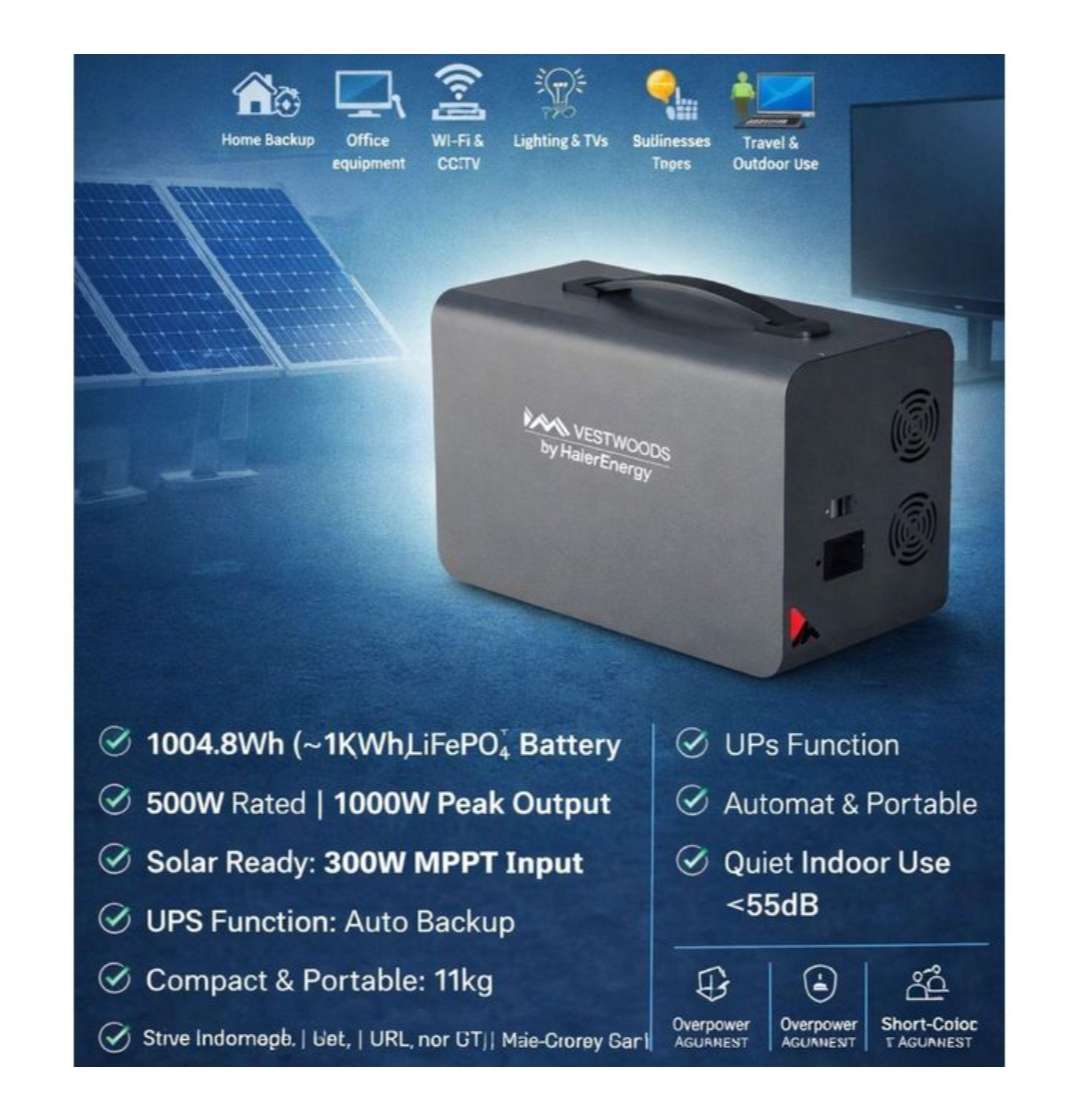
If you are powering a few essentials rather than the whole building, a small battery system can safely cover the gap. The Vestwoods 1KW Backup Power Station is a portable power station rated at 1000W, suited to TVs, laptops, routers, lighting and fans. It is not a substitute for wiring a house to a generator, but it keeps the essentials on while you get your changeover switch installed properly.
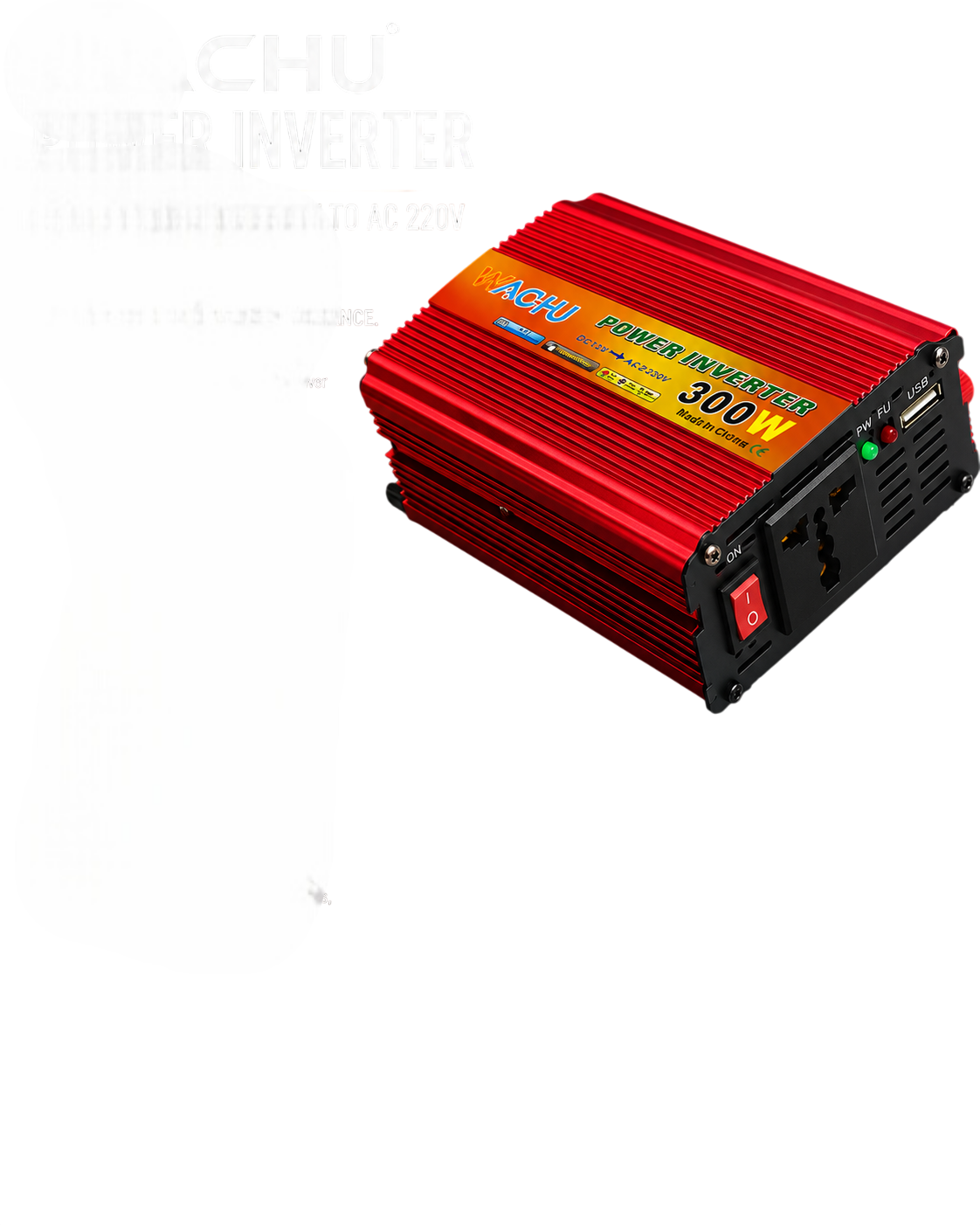
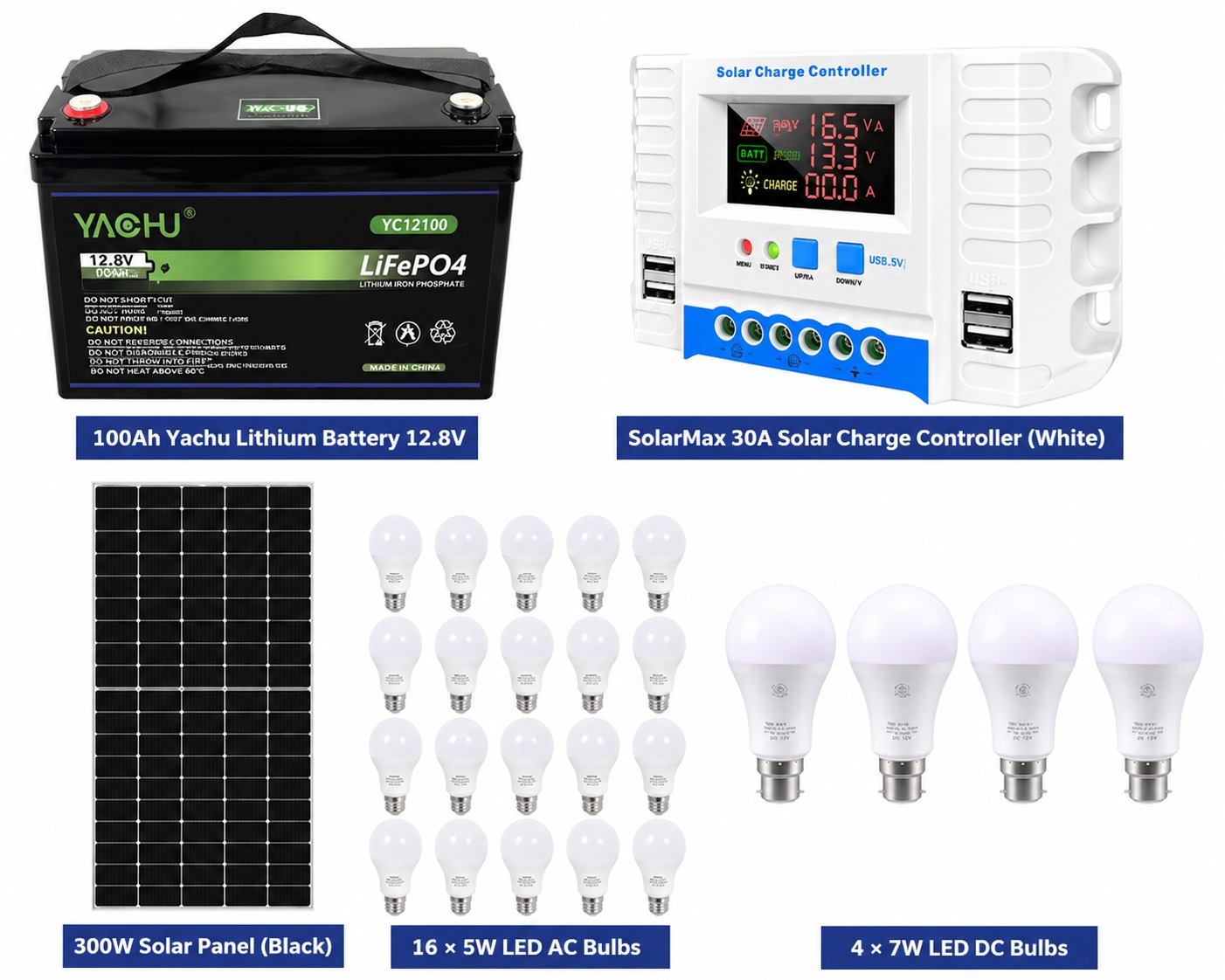
For lighting-led backups in a small shop or home, the Yachu 100Ah Solar Power Kit with 300W Inverter & 30A Controller combines a battery, a 300W inverter, a charge controller and 20 LED bulbs. A 300W inverter runs lighting and small electronics; it will not start a fridge, pump or kettle.
Load limits: spreading the heavy appliances
Generators are often bought by adding up appliance labels, then tripping on the first evening. Motor-driven items — fridges, freezers, water pumps, air conditioners — draw a big surge for a second or two on start-up, typically two to three times their running wattage.
Use this rough table of typical running wattages to plan, then check each appliance's own label.
| Appliance | Typical running watts | Start-up surge |
|---|---|---|
| LED bulbs (each) | 5–15 | None |
| LED TV, decoder | 60–120 | None |
| Fridge or freezer | 150–400 | Yes, 2–3× |
| Water pump | 300–750 | Yes, 2–3× |
| Iron or kettle | 1000–2000 | None, but very heavy |
To stay safe:
- Add up running wattages and keep the total to about half to two-thirds of the generator's rated output.
- Start the heaviest motor first, let it settle, then switch on the next.
- Do not run the fridge, freezer and pump at the same moment on a small set.
- Unplug kettles and irons when the generator is the source. Boil water on the jiko instead.
For farms and homes with a water problem, a solar pump avoids the generator dilemma entirely. The 2″ Honda Water Pump Set is a 2-inch Honda water pump set for irrigation and water transfer, with delivery and suction pipes included. Where the need is a steady off-grid water supply rather than a backup, a solar submersible pump does the work without fuel. Treat water pumping as a separate system from your backup generator — that alone removes your heaviest load.
Everyday habits that prevent poisoning and fires
- Switch off the generator before refuelling, and let it cool.
- Check the oil level before each long run; low oil damages engines and can cause overheating.
- Keep the exhaust clear and never cover the machine while running.
- Fit a battery-powered carbon monoxide alarm in any room close to the generator, and test it monthly.
- Keep children and customers away from the set, cables and fuel cans.
- Run cables overhead or along walls, never across walkways where people trip or drive over them.
- Switch off the generator at night unless it sits far from sleeping areas, and never leave it running in a closed shop.
Maintenance and safety checks that pay off
Change the oil at the interval in the manual, clean or replace the air filter, and check fuel lines for cracks. Service the changeover switch and earth connection at least once a year by an electrician. Keep a dry-powder extinguisher within reach and know how to use it.
None of this is expensive compared with a fire or a hospital visit. Site it outside, store fuel small and sealed, earth and switch properly, and never load it past what it can carry.
Frequently asked questions
Can I put my generator inside the house during rain?
No. Generators produce carbon monoxide, which can build up and kill in enclosed or partly enclosed spaces. Use an open-sided roof shelter outdoors instead.
Do I need an earth rod and changeover switch for a generator in Kenya?
Yes. A proper earth connection protects against shock, and a changeover switch prevents your generator from back-feeding KPLC lines while someone is working on them.
How much petrol should I store at home for a generator?
Keep only what you need for a few days, usually a 20-litre or smaller approved jerrican, stored sealed in a cool, ventilated place away from the house and any flame.
Products in this guide
- Vestwoods 1KW Backup Power Station
- Yachu 100Ah Solar Power Kit with 300W Inverter & 30A Controller
- 2″ Honda Water Pump Set
Prices and stock change often; open each product for today's price.

Author
Solar Africa
Related posts