


By Solar Africa On 16-11-2026 at 7:42 am
Solar CCTV for Farms and Sites Without Power in Kenya
If your shamba, plot or site has no KPLC connection, security is usually the first thing you think about and the last thing you can power. The good news is that a small solar CCTV setup is very achievable. It does not need a big solar system, and most of the cost is a one-off. The trick is planning it properly before you buy anything.
This guide walks through the whole job: what size panel and battery you need, why recording must keep going when there is nothing to plug into, which cameras suit outdoor distance work, and how to stop the equipment walking away.
What you need
- A clear idea of what you are watching: gate, homestead, store, water point or the whole boundary.
- Cameras rated for outdoor use, with night vision and a decent detection range.
- A solar panel sized for the camera load plus a battery sized for the night.
- A charge controller, fuses and proper cable.
- A mounting point that is high, shaded from the worst sun on the battery box, and hard to reach.
- A way to view and record: onboard SD card, a small recorder, or 4G remote viewing.
Why the power design matters more than the camera
Most disappointment with off-grid CCTV is a power problem, not a camera problem. A camera that works beautifully in the shop fails in week three because the battery is flat by 2am or the panel never catches enough sun in the rainy season.
Think of it as three jobs: the panel must replace what the camera uses each day, the battery must carry the camera through the night, and a controller must stop the battery being overcharged or run flat.
Step 1: work out the daily load
Add up the watts each device uses and multiply by the hours it runs. A typical small camera might draw around 5–10W during the day, with a little more at night when infrared LEDs come on. A 4G camera uses extra power when sending video.
| Device | Typical draw |
|---|---|
| Small outdoor camera, day | Approx. 5–10W |
| Same camera, night with IR | Approx. 10–15W |
| 4G router or SIM camera uplink | Approx. 3–8W |
| Small recorder or NVR | Approx. 10–20W |
Example: two cameras at roughly 8W average, running 24 hours, use about 384Wh a day. That is not huge, but it is not nothing either.
Step 2: size the panel
In most of Kenya you can expect roughly 4 to 5 good sun hours a day on average, less in dull coastal or highland weather. Divide the daily load by those hours and add a margin of 30–50% for losses, dust and cloudy days. For 384Wh a day at 4.5 sun hours, you need about 85W before margin, so 120–150W of panel is a sensible target.
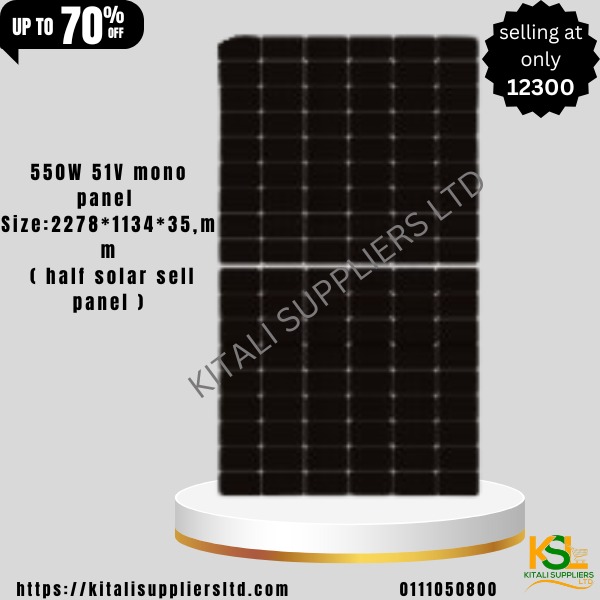
Very small single-camera setups can run on far less. A 60W panel such as the 60w Solar Panel 18v Monocrystalline Solar Panel is a fair match for one low-power camera and a small battery. For a bigger array feeding several cameras and a recorder, a higher-output module like the 270W Golden Solar Bifacial Solar Panel gives you more headroom.
Step 3: size the battery
The battery must cover the night plus a dull morning. Take the night load (say 12 hours at 8W, about 96Wh per camera) and double it for safety. A single camera is comfortable on a small sealed battery such as the Ritar 12V 9Ah VRLA Rechargeable Battery. A multi-camera site with a recorder needs much more storage; a deep-cycle unit like the 12V 150Ah/10Hr Deep Cycle Solar Battery is the kind of capacity that carries that load.
Keep batteries in a shaded, ventilated box, never in a sealed plastic bag, and never on a concrete floor without a board underneath.
Recording has to continue on its own
On a farm or unoccupied site, nobody is watching the live feed at 3am. If the camera only streams to a phone, a network drop or a flat battery means you have no evidence. Insist on local recording: an SD card in the camera or a small recorder on the same solar circuit.
Set recording to motion-triggered rather than continuous to save power and card space, and choose a card size that holds at least a week of clips. Test playback before you mount anything high.
Choosing cameras for distance and weather
- Outdoor rating: the body must survive rain and dust, not just “work outside”.
- Night vision: check the effective IR distance, not the marketing figure.
- Lens choice: a narrow view reaches further down a fence line; a wide view covers a gate area.
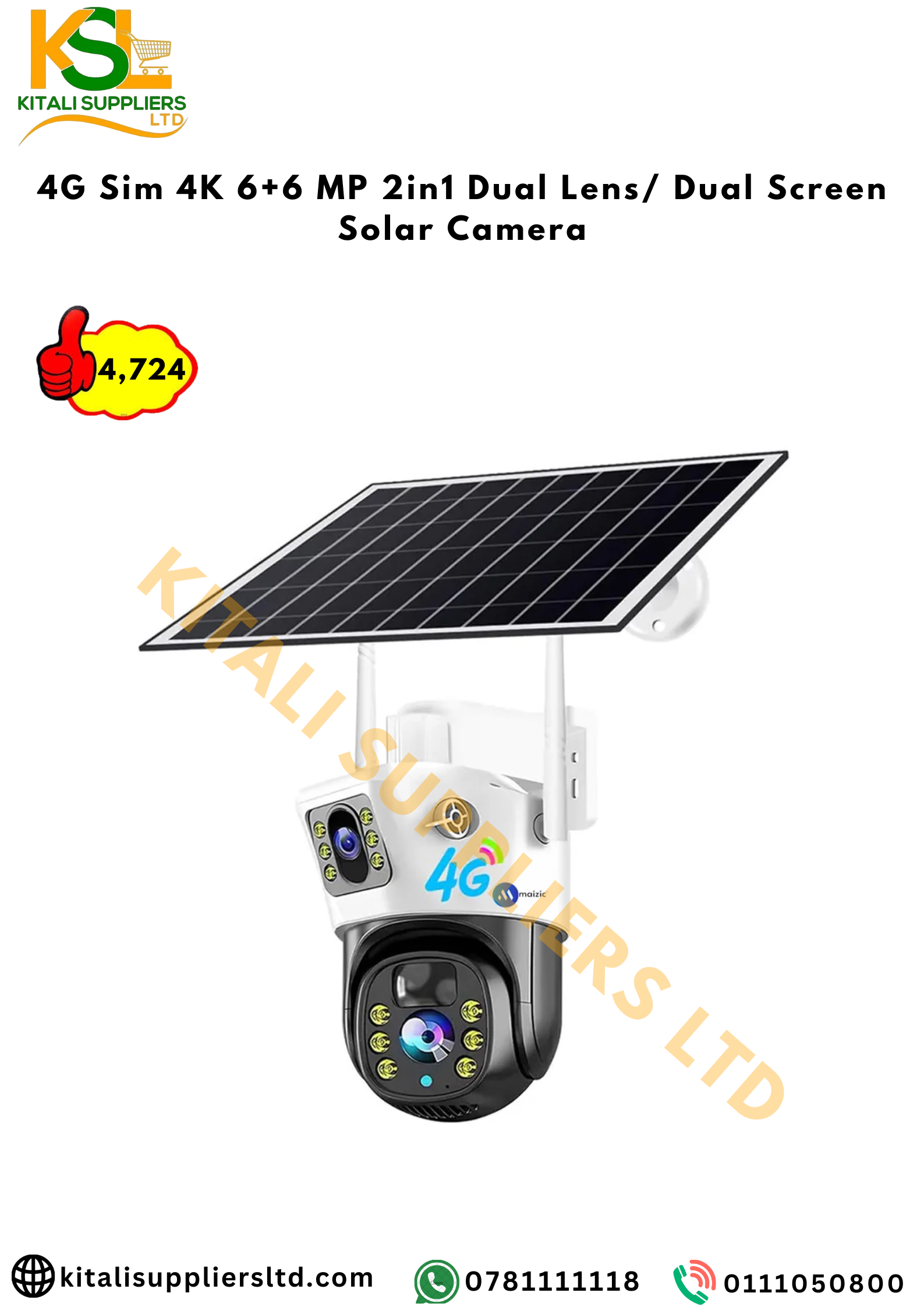
- No WiFi, no mains: for remote plots a 4G SIM camera solves both the network and the cable problem. The SmartVision 4G SIM 4K 6+6MP Dual-Lens Solar Security Camera is one example, with dual 6MP lenses, solar support, night vision and motion alerts to a phone.
Place cameras at a height where faces are visible (roughly 2.5–3m) and angle them away from the low sun. Add a separate motion light near the gate so the camera sees movement clearly; the Outdoor 120 LED Motion Sensor Lights works on its own circuit and does not need to run all night.
Cost to run
There is no power bill. The real running costs are a data bundle if you use SIM cameras, replacing a battery every few years, and occasional cleaning. Treat the battery as a consumable, not a permanent fixture.
Common mistakes
- Buying the camera first, then guessing the panel.
- Mounting the panel flat or in shade — even a small shadow cuts output heavily.
- No fuse between battery and camera; one short circuit can destroy the lot.
- Using thin, long cable and losing voltage.
- Putting the battery box where anyone can open it.
Protecting the kit
Solar panels, batteries and cameras are all attractive to thieves. Bolt panels down with security bolts, mount cameras above reach, hide or lock the battery box, and consider a cheap second camera watching the power box itself. Keep dust off panels — a dirty panel can lose a meaningful share of its output.
Maintenance and safety
Check the system monthly: clean panels, confirm the battery is charging, and look for water in connectors. Fuse every positive cable, keep the controller dry, and never work on a live battery with metal tools. If anything smells hot or swollen, disconnect and replace it.
Frequently asked questions
How big a solar panel do I need for a CCTV camera?
For a single low-power outdoor camera, a 60W panel with a small battery is often enough, while several cameras plus a recorder usually need 120W or more. Always add 30–50% margin because sunshine in Kenya is not the same every day of the year.
Can CCTV work without WiFi on a farm?
Yes. A 4G SIM camera records to an SD card and sends alerts over the mobile network, with no WiFi or mains cable needed. Check mobile coverage at the exact camera position first, because signal at the gate can differ from the house.
How long will a battery run CCTV overnight?
That depends on camera draw and battery capacity. Work out the night load in watt-hours, then double it for a safe battery size, and keep the battery in a shaded, ventilated box so it lasts.
Products in this guide
- 60w Solar Panel 18v Monocrystalline Solar Panel
- 270W Golden Solar Bifacial Solar Panel
- Ritar 12V 9Ah VRLA Rechargeable Battery
- 12V 150Ah/10Hr Deep Cycle Solar Battery
Prices and stock change often; open each product for today's price.

Author
Solar Africa
Related posts